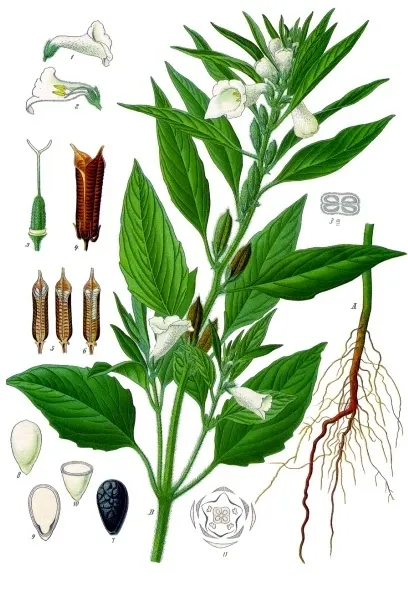
Photo: Franz Eugen Köhler, Köhler's Medizinal-Pflanzen, Public domain (via Wikimedia Commons)
Sesame
Sesamum indicum
Also known as Benne, Gingelly, Til, Simsim, Beniseed
Key benefits
✦Traditional uses
✦Sesame is one of the oldest oilseed crops cultivated by humankind, pressed for its rich golden oil in Mesopotamia and the Indus Valley thousands of years before it reached modern kitchens. In Ayurvedic tradition, warm sesame oil has long been massaged into the skin and scalp as part of daily self-care, believed to calm the nerves and keep joints supple. Traditional Chinese medicine has valued the black seed as a tonic for nourishing blood and strengthening the liver and kidneys, especially as the hair and body age. Across the Middle East and West Africa, the toasted seed and its oil became a kitchen staple prized for both flavor and vitality.
How to grow & use it
✦The full apothecary for Sesame
Traditional remedies and step-by-step preparations, a complete growing guide, and how to harvest, dry, and store it, all unlocked with HerbLens Unlimited.
- ✦Remedies & preparations
- ✦ Growing guide
- ✦Harvest & storage
From under $6 a month. Free plant identifications always included.
- ✦Turmeric
- ✦Ginger
- ✦Ashwagandha
- ✦Sunflower seed and oil
- ✦Tahini substituted with sunflower seed butter
“For a golden, nutty oil and seed that has warmed kitchens, skin, and hearts for five thousand years.”
Sesame seeds were so precious for their long shelf life and rich oil that the phrase "open sesame" from One Thousand and One Nights likely nods to the audible pop the pods make when they split open at harvest.
Sesame is a major food allergen and can cause severe or life-threatening reactions in people with a sesame allergy, who should avoid it entirely. Otherwise it is a safe, commonly eaten food best enjoyed in ordinary amounts.