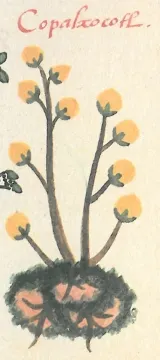
Photo: es:Martín de la Cruz, Public domain (via Wikimedia Commons)
Copal
Protium copal
Also known as Mexican Copal, Copal Santo, Chachalaca Resin
Key benefits
✦Traditional uses
✦For thousands of years before the Spanish arrived, the Maya and Aztec burned copal resin as an offering to the gods, filling temples and household altars with its warm, piney smoke. The Aztecs called it copalli, the root of the Spanish word we still use today, and it was valued highly enough to be paid as tribute and traded across Mesoamerica. Healers and midwives traditionally used the smoke to cleanse a home, a person, or a ceremonial space, and the soft resin itself was pressed onto minor cuts, stings, and skin irritations as a folk remedy. That dual role, sacred and practical, has kept copal at the center of Mexican and Central American herbal tradition right up to the present day.
How to grow & use it
✦The full apothecary for Copal
Traditional remedies and step-by-step preparations, a complete growing guide, and how to harvest, dry, and store it, all unlocked with HerbLens Unlimited.
- ✦Remedies & preparations
- ✦ Growing guide
- ✦Harvest & storage
From under $6 a month. Free plant identifications always included.
- ✦Palo Santo
- ✦White Sage
- ✦Frankincense
- ✦Frankincense (Boswellia)
- ✦Myrrh (Commiphora)
“For the moment you want to clear a space, mark it as set apart, and let the smoke carry something old and steady into the room.”
Archaeologists have found traces of burned copal resin in incense burners at Maya and Aztec temple sites, meaning the same fragrant smoke that once rose over stone pyramids can still be recreated with a resin tear and a piece of charcoal today.
Copal resin can irritate skin or trigger allergic reactions in sensitive people, so patch test before wider use. The smoke may irritate the eyes, throat, or lungs in enclosed spaces, and the raw resin isn't meant to be swallowed.