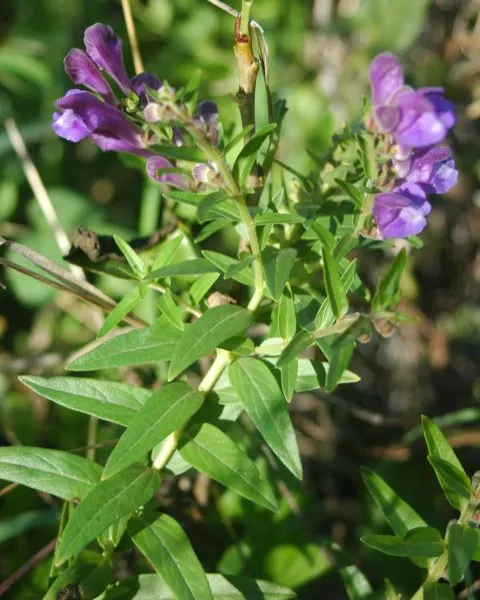
Photo: Doronenko, CC BY 3.0 (via Wikimedia Commons)
Baikal Skullcap
Scutellaria baicalensis
Also known as Chinese Skullcap, Huang Qin, Golden Root Skullcap, Baical Skullcap
Key benefits
✦Traditional uses
✦Known in Chinese herbalism as Huang Qin, or 'yellow root,' this plant's thick golden root has been a cornerstone of East Asian medicine for over two thousand years, first recorded in the classic Divine Farmer's Materia Medica. Traditional practitioners reached for it to clear what they called damp heat from the body, easing feverish coughs, sore throats, and digestive upset alike. It was often combined with two other roots, Coptis and Phellodendron, in a trio old healers nicknamed 'the three yellows' for their shared golden color and heat-clearing reputation. Over centuries it traveled from folk remedy to one of the most extensively studied roots in the modern herbal world.
Growing guide
✦Fresh to dried
✦Traditional preparations
✦Huang Qin Root Decoction
The traditional way to prepare this root, gently simmered to draw out its bitter, cooling character.
How it's made. Traditionally, a decoction is made by simmering 3 grams of the dried, sliced root in 500 ml of water for 15 to 20 minutes, then straining and sipping while warm.
Skullcap Root Tincture
A concentrated liquid extract favored by herbalists for its convenience and long shelf life.
How it's made. Traditionally prepared by steeping the dried, chopped root in alcohol for four to six weeks, shaking occasionally, then straining into a dark glass bottle.
- ✦Licorice root (Gan Cao)
- ✦Coptis root (Huang Lian)
- ✦Forsythia fruit
- ✦Coptis chinensis root (for heat-clearing bitterness)
- ✦American skullcap, Scutellaria lateriflora, though it is a different species used traditionally for calming rather than heat-clearing
“For the old, cooling root that generations of herbalists turned to whenever heat needed calming.”
The genus name Scutellaria comes from the Latin scutella, meaning 'little dish,' a nod to the small saucer-shaped bump on the flower's calyx that looked to early botanists like a tiny cap or shield, which is how skullcap earned its common name.
Has occasionally been linked to liver enzyme changes, especially with prolonged or high-dose use, and it may interact with blood thinners, sedatives, and diabetes medication. It is avoided during pregnancy and breastfeeding, and it is a distinct species from American skullcap (Scutellaria lateriflora), so the two should not be substituted for each other.