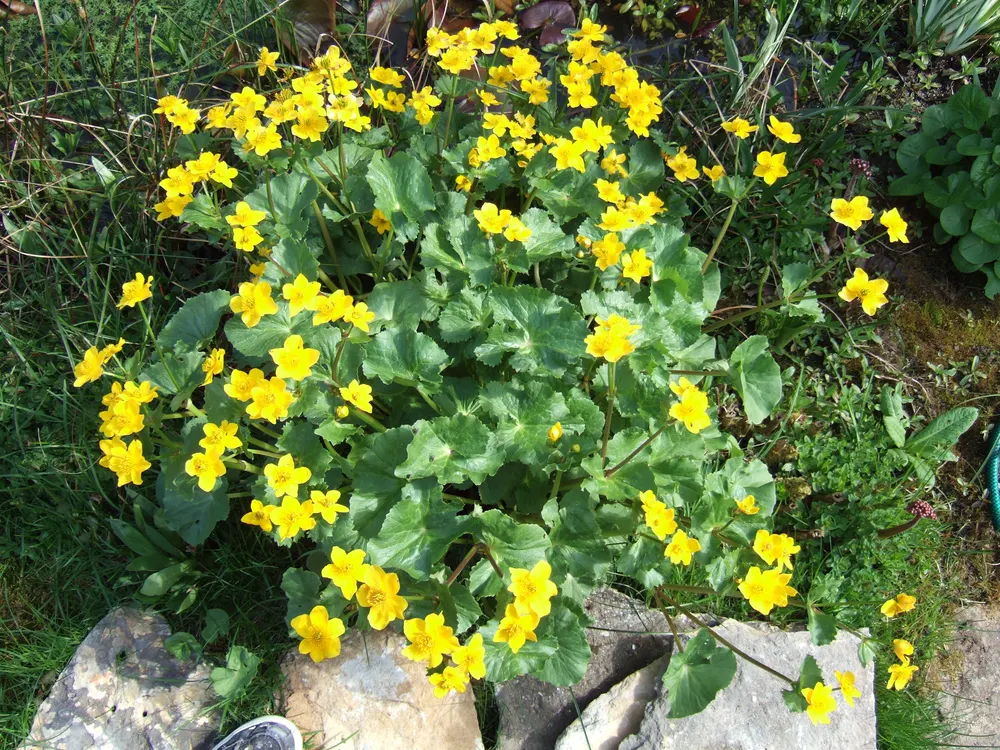
Photo: Jasper33, Public domain (via Wikimedia Commons)
Marsh Marigold
Caltha palustris
Also known as Kingcup, May Blob, Meadow-Bright
Key benefits
✦Traditional uses
✦Long before it wore the name marigold, this cheerful buttercup relative was one of the first flowers to light up northern wetlands each spring, and it found its way into old May Day garlands and the rushes strewn across church floors as a welcome sign that winter had loosened its grip. In parts of Europe, the tightly closed flower buds were sometimes pickled in vinegar as a caper substitute, and the boiled young leaves occasionally turned up as a foraged spring green, but only after careful, thorough cooking to tame their acrid sap. Country herbalists in some traditions applied crushed leaves externally as a sharp counter-irritant for stiff joints, a practice that carried real risk of blistering the skin. Today marsh marigold is prized far more for the gold it brings to a wet corner of the garden than for any place in the kitchen or medicine cabinet.
How to grow & use it
✦The full apothecary for Marsh Marigold
Traditional remedies and step-by-step preparations, a complete growing guide, and how to harvest, dry, and store it, all unlocked with HerbLens Unlimited.
- ✦Remedies & preparations
- ✦ Growing guide
- ✦Harvest & storage
From under $6 a month. Free plant identifications always included.
- ✦Yellow flag iris
- ✦Ferns
- ✦Joe-Pye weed
- ✦Globeflower (Trollius)
- ✦Water avens
“For the muddy, glorious edge of a pond in April, when nothing else in the garden dares to bloom yet.”
Despite its name, marsh marigold is not a true marigold at all, it belongs to the buttercup family rather than the daisy family that gives us garden marigolds. Shakespeare called it the 'winking Mary-bud' in Cymbeline, and its common name likely comes from 'Mary's gold,' an old devotional nod to the Virgin Mary rather than any real kinship with marigolds.
All parts of marsh marigold contain protoanemonin, an acrid, blistering compound from the same glycoside family found in buttercups, and the fresh plant is toxic and irritating if chewed or swallowed, causing burning, mouth and throat blistering, and digestive upset, along with skin or eye irritation from contact with its sap. Livestock, pets, and children should never be allowed to graze or nibble on it, and because drying or cooking only partially reduces its acridity, it is not recommended for home teas, tinctures, poultices, or any other ingestion or skin remedy. Wear gloves when dividing, weeding, or handling cut stems. If you are ever unsure whether a plant is safe for you, your family, or your animals, consult a qualified herbalist, physician, or veterinary professional rather than experimenting.