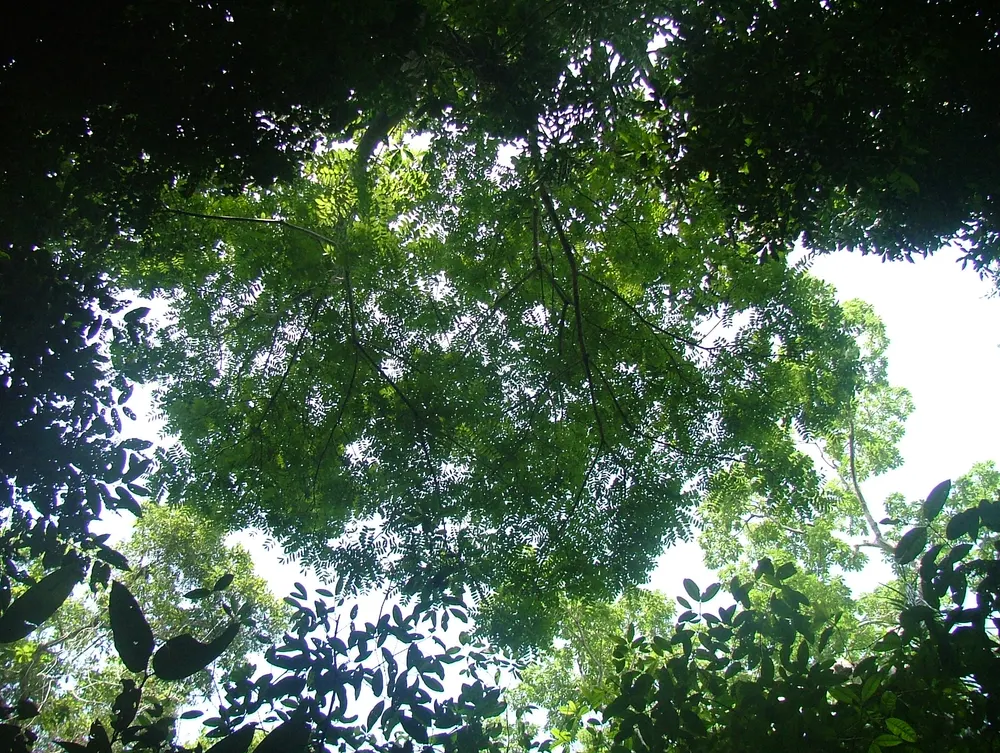
Photo: Smartse, CC BY-SA 3.0 (via Wikimedia Commons)
Paradise Tree
Simarouba amara
Also known as Paradise Tree, Dysentery Bark, Marupá, Aceituno, Negrito
Key benefits
✦Traditional uses
✦Deep in the forests of Central and South America, healers have long stripped the bark of the paradise tree to brew a bitter decoction for dysentery and stubborn diarrhea, earning it the common name dysentery bark in English-speaking parts of its range. It was also taken as a bitter tonic to settle the stomach and, in some traditions, brewed to ease malarial fevers before quinine bark became widely available. In the twentieth century, that same bitter bark drew the attention of Western science, when researchers isolated a compound from it for early cancer research, a reminder that folk remedy and laboratory curiosity have often walked the same forest path.
How to grow & use it
✦The full apothecary for Paradise Tree
Traditional remedies and step-by-step preparations, a complete growing guide, and how to harvest, dry, and store it, all unlocked with HerbLens Unlimited.
- ✦Remedies & preparations
- ✦ Growing guide
- ✦Harvest & storage
From under $6 a month. Free plant identifications always included.
- ✦Quassia
- ✦Ginger
- ✦Chamomile
- ✦Quassia amara (a close botanical relative with a similarly bitter bark)
- ✦Cinchona bark (historically used for fevers, though chemically distinct)
“For the old forest remedy the healers reached for when the stomach turned against you.”
In the 1970s, American researchers isolated a compound called glaucarubinone from Simarouba amara bark and tested it against leukemia cells, making this humble Amazonian bark one of the earliest plants studied in the modern search for cancer-fighting compounds from the rainforest.
The intensely bitter bark can cause nausea, vomiting, or stomach irritation if taken in excess or over a long period. Avoid during pregnancy and breastfeeding, and it is not appropriate for children.