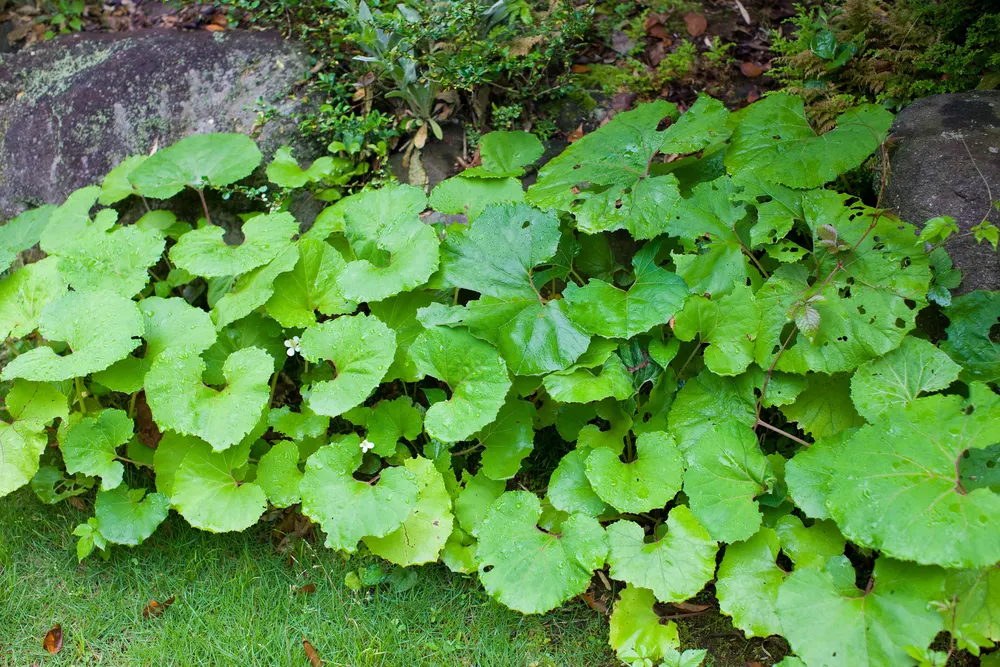
Photo: Joi Ito, CC BY 2.0 (via Wikimedia Commons)
Fuki (Japanese Butterbur)
Petasites japonicus
Also known as Fuki, Japanese butterbur, Sweet coltsfoot, Giant butterbur (var. giganteus), Fukinotou (the flower buds)
Key benefits
✦Traditional uses
✦Long before the snow has fully cleared in Japan, small flower buds called fukinotou push up through the cold earth, and their appearance has for centuries been celebrated as one of the first true signs of spring. Cooks have prized these buds and the tender young leaf stalks that follow, working them into simmered dishes, tempura, and miso preparations that carry a distinctive, pleasantly bitter edge said to awaken the palate after winter. In folk tradition the plant was also associated with soothing coughs and settling the stomach, though those uses belong to an older herbal memory rather than anything modern research supports. What has endured most clearly is fuki's place at the table, where its brief spring appearance is treated almost as a small seasonal holiday.
How to grow & use it
✦The full apothecary for Fuki (Japanese Butterbur)
Traditional remedies and step-by-step preparations, a complete growing guide, and how to harvest, dry, and store it, all unlocked with HerbLens Unlimited.
- ✦Remedies & preparations
- ✦ Growing guide
- ✦Harvest & storage
From under $6 a month. Free plant identifications always included.
- ✦Miso
- ✦Fresh ginger
- ✦Dashi and soy sauce
- ✦Ashitaba (Angelica keiskei) for a similarly bitter spring green
- ✦Young burdock root (gobo) as another traditional Japanese spring vegetable
“For the first bitter green of the year, pushing up through thawing ground before anything else dares to bloom.”
The giant coastal form of this plant, found on Hokkaido and Sakhalin, grows leaves so enormous that local tradition tells of people once using a single leaf as an impromptu umbrella in a sudden rain.
Petasites japonicus naturally contains pyrrolizidine alkaloids (PAs), compounds recognized to be toxic to the liver and considered potentially carcinogenic with repeated exposure, especially in unprepared or raw plant material. For this reason the plant should never be eaten raw. Traditional Japanese preparation involves peeling and thoroughly parboiling the stalks and buds to reduce bitterness, but this process is not reliably proven to remove all pyrrolizidine alkaloid content, so even traditionally prepared fuki is generally eaten only occasionally and in modest amounts rather than as a daily food. It is not recommended during pregnancy or while breastfeeding, and it should be avoided by anyone with liver disease or by those taking other medications that stress the liver. Commercial PA-free extracts exist for a related species, Petasites hybridus, but these are pharmaceutical preparations and are in no way equivalent to the raw or home-prepared plant. Because of these real toxicity concerns, this entry intentionally omits any home remedy or dosing guidance. Please talk to a qualified healthcare professional or an experienced herbalist before considering this plant for any medicinal purpose.