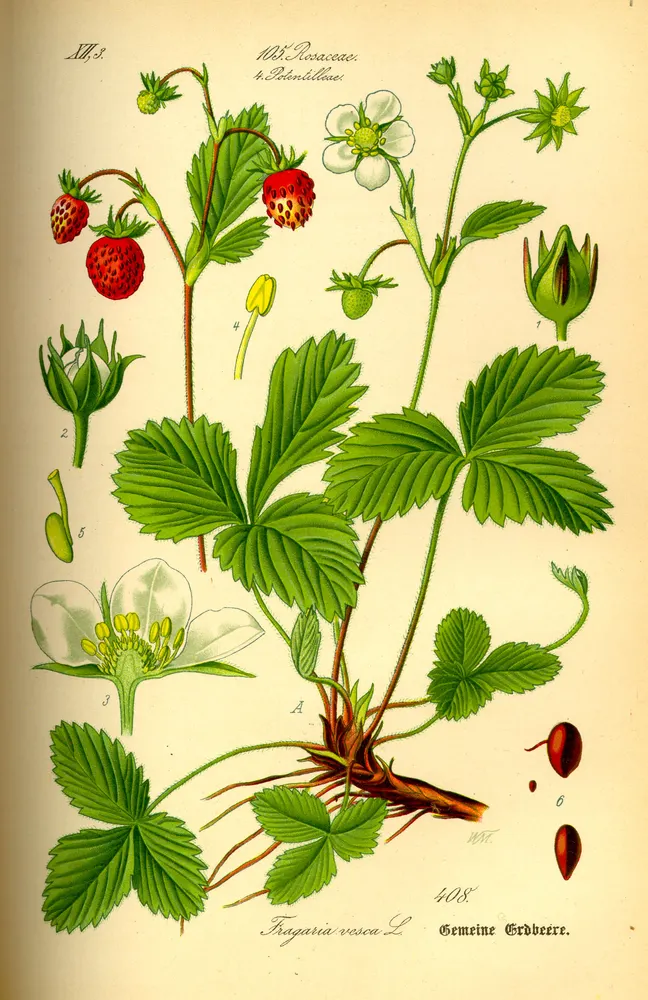
Photo: Public domain (via Wikimedia Commons)
Wild Strawberry
Fragaria vesca
Also known as Woodland Strawberry, Alpine Strawberry, European Strawberry, Fraises des Bois
Key benefits
✦Traditional uses
✦Long before the plump garden strawberry existed, cooks and healers were gathering its small, intensely sweet wild cousin from hedgerows and forest clearings. European folk herbalists dried the leaves for a mild, tannin-rich tea traditionally used to ease loose stools and calm an unsettled stomach, while the same brew was gargled for sore throats and mouth irritation. Medieval and Renaissance herbals praised the whole plant, root included, as a blood-purifying spring tonic, and the ripe fruit found its way into old beauty rituals, mashed and pressed onto the skin to brighten a tired complexion. It has been a quiet, dependable presence in cottage gardens and kitchen medicine chests for centuries.
How to grow & use it
✦The full apothecary for Wild Strawberry
Traditional remedies and step-by-step preparations, a complete growing guide, and how to harvest, dry, and store it, all unlocked with HerbLens Unlimited.
- ✦Remedies & preparations
- ✦ Growing guide
- ✦Harvest & storage
From under $6 a month. Free plant identifications always included.
- ✦Peppermint
- ✦Chamomile
- ✦Raspberry leaf
- ✦Raspberry leaf
- ✦Blackberry leaf
“For a small taste of the hedgerow, sweeter and wilder than anything you'll find in a store.”
The strawberry is not truly a berry at all. What you eat is a swollen flower receptacle, and the real fruits are the tiny seed-like specks, called achenes, dotting its surface, each one a fruit in its own right.
Wild strawberry leaf and fruit are safe to eat, though those with a rose-family fruit allergy should be cautious.