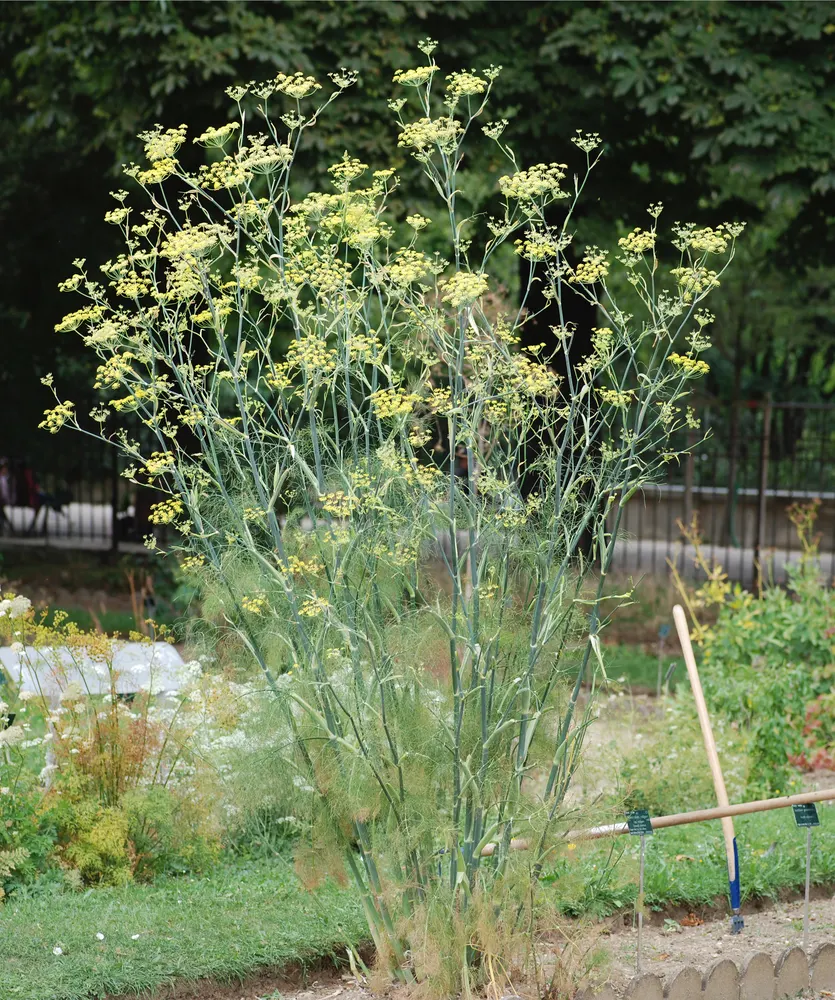
Photo: Alvesgaspar, CC BY-SA 3.0 (via Wikimedia Commons)
Fennel
Foeniculum vulgare
Also known as Sweet Fennel, Finocchio, Wild Fennel, Florence Fennel
Key benefits
✦Traditional uses
✦Fennel has been chewed after meals from ancient Rome to modern India, a habit that grew out of centuries of trust in its ability to settle an uneasy stomach. Greek and Roman physicians recommended it for digestion and eyesight, and medieval herbalists hung it over doorways believing it warded off illness and evil spirits alike. Across cultures, nursing mothers turned to fennel seed tea in hopes of supporting a healthy milk supply, a use that carried it into kitchens and apothecaries side by side. It has long been considered one of the gentlest, most companionable herbs in the traditional digestive repertoire.
How to grow & use it
✦The full apothecary for Fennel
Traditional remedies and step-by-step preparations, a complete growing guide, and how to harvest, dry, and store it, all unlocked with HerbLens Unlimited.
- ✦Remedies & preparations
- ✦ Growing guide
- ✦Harvest & storage
From under $6 a month. Free plant identifications always included.
- ✦Chamomile
- ✦Peppermint
- ✦Ginger
- ✦Anise seed
- ✦Caraway seed
“For the quiet hour after a heavy meal, when the table has been cleared and the stomach asks for something gentle.”
The ancient Greek word for fennel, marathon, gave its name to the town of Marathon and, eventually, to the 26.2 mile race, since the battlefield where the famous run began was once a field of wild fennel.
Fennel is safe in ordinary culinary amounts, though those allergic to carrot, celery, or parsley should watch for cross-reactivity. Its estrogen-like compounds mean concentrated or medicinal amounts are best avoided during pregnancy, and the essential oil should not be taken internally.