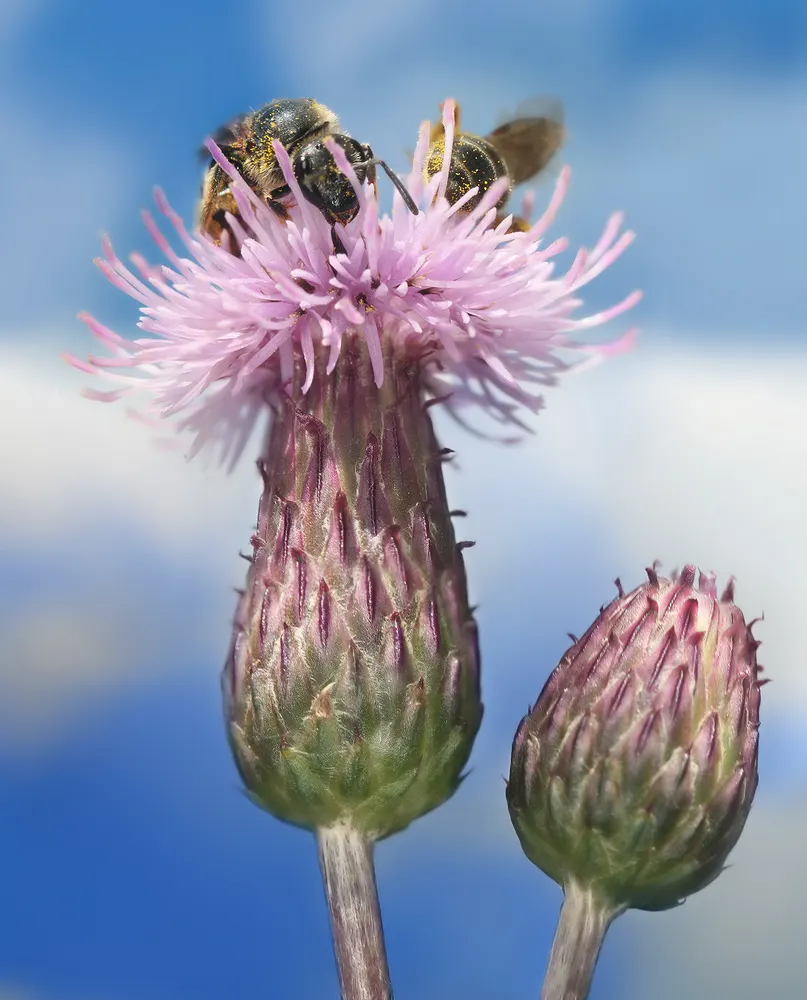
Photo: Richard Bartz, Munich aka Makro Freak, CC BY-SA 2.5 (via Wikimedia Commons)
Creeping Thistle
Cirsium arvense
Also known as Canada Thistle, Field Thistle, Cursed Thistle, Perennial Thistle
Key benefits
✦Traditional uses
✦Despite its fierce reputation as a farmer's foe, creeping thistle has a long quiet history as a hedgerow remedy. European folk herbalists gathered the young leaves and roots for teas thought to settle the stomach and ease water retention, while the peeled stems and roots were sometimes eaten as a humble spring vegetable in lean seasons. Some Indigenous communities in North America, where the plant later naturalized, adapted similar poultice and infusion traditions for minor skin complaints. It was never a headline herb, more a plant people learned to use simply because it grew everywhere and nothing else did.
How to grow & use it
✦The full apothecary for Creeping Thistle
Traditional remedies and step-by-step preparations, a complete growing guide, and how to harvest, dry, and store it, all unlocked with HerbLens Unlimited.
- ✦Remedies & preparations
- ✦ Growing guide
- ✦Harvest & storage
From under $6 a month. Free plant identifications always included.
- ✦Dandelion leaf
- ✦Nettle
- ✦Peppermint
- ✦Milk thistle leaf
- ✦Burdock leaf
“For the small, prickly weed that quietly fed and mended people long before anyone thought to call it a pest.”
Despite its name, creeping thistle is not actually native to Canada. It arrived in North America from Europe and Asia with early colonial crop seed, and only picked up the misleading name because it became so notorious in Canadian farm fields.
Creeping thistle isn't toxic, but every part of the growing plant carries sharp spines, so wear gloves when handling or harvesting it.