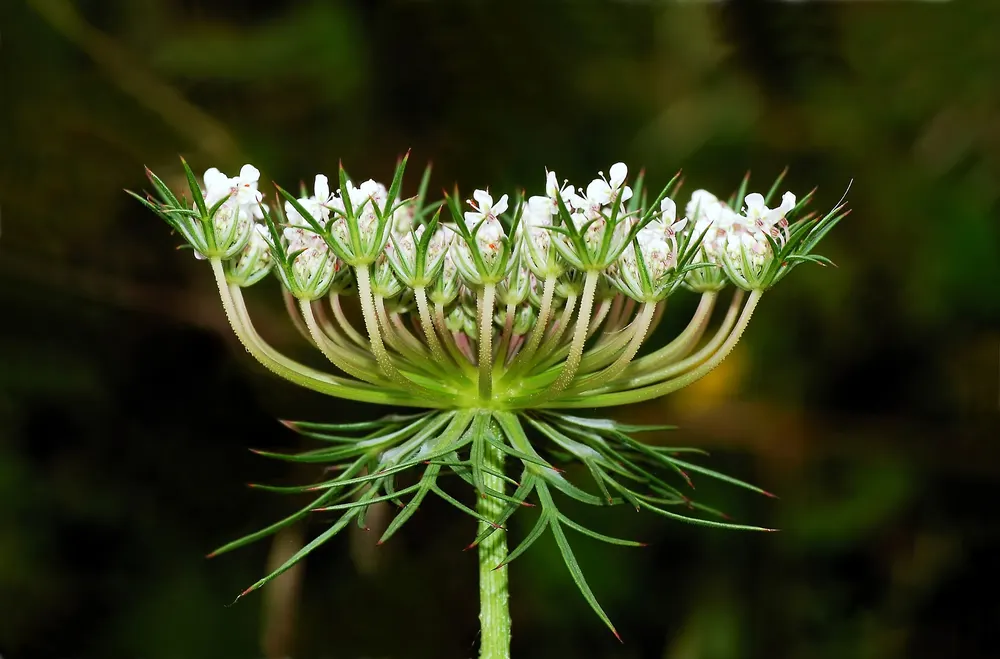
Photo: Alvesgaspar, CC BY-SA 3.0 (via Wikimedia Commons)
Wild Carrot
Daucus carota
Also known as Queen Anne's Lace, Bird's Nest, Bishop's Lace
Key benefits
✦Traditional uses
✦Long before it was bred into the sweet orange root we know today, wild carrot grew freely across Europe and central Asia, where old-world herbalists steeped its leaf, root, and seed for digestive and kidney complaints. The Greeks and Romans called it by names tied to the carrot family, and English folk tradition later renamed it Queen Anne's Lace, weaving the flower into royal legend. Its cultivated descendant became one of the most trusted kitchen roots in the world, prized for both nourishment and gentle everyday remedies passed down through generations of cooks and herb wives. Because the wild form is so easily confused with dangerous relatives, its old medicinal reputation has always traveled alongside careful teaching about identification.
How to grow & use it
✦The full apothecary for Wild Carrot
Traditional remedies and step-by-step preparations, a complete growing guide, and how to harvest, dry, and store it, all unlocked with HerbLens Unlimited.
- ✦Remedies & preparations
- ✦ Growing guide
- ✦Harvest & storage
From under $6 a month. Free plant identifications always included.
- ✦Fennel
- ✦Dill
- ✦Parsley
- ✦Cultivated carrot root
- ✦Parsley root
“For the meadow dressed in lace, and the sweetness that grows quietly beneath it.”
The name Queen Anne's Lace comes from an old bit of English folklore: as the story goes, Queen Anne pricked her finger while tatting lace, and a single drop of blood fell into the pattern, which is said to explain the one small dark purple floret found at the center of the flower's white lace-like cluster.
Wild carrot closely resembles deadly relatives like poison hemlock and water hemlock, so it should never be foraged without expert identification. Its sap can cause a painful skin reaction in sunlight, and the seed has a traditional history of disrupting pregnancy, so it should not be used by anyone who is pregnant or trying to conceive.