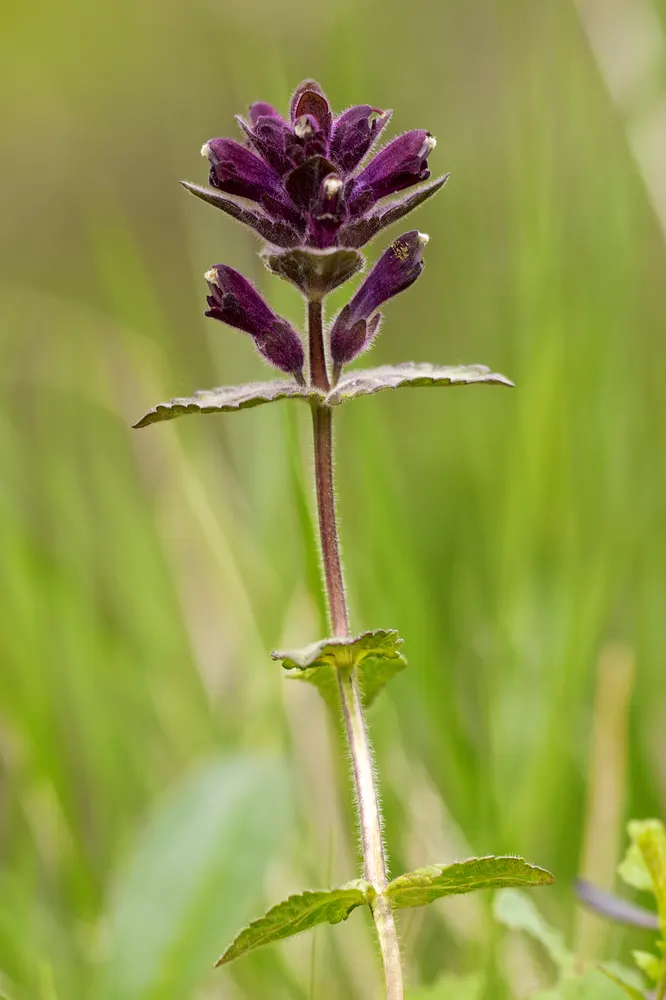
Photo: Jörg Hempel, CC BY-SA 3.0 de (via Wikimedia Commons)
Alpine Bartsia
Bartsia alpina
Also known as Velvetbells, Alpine Bartsia
Key benefits
✦Traditional uses
✦Alpine bartsia does not carry a folk-medicine or kitchen-herb history the way lowland herbs do. It has instead earned its place in botanical lore as a jewel of the high, cold, and clean places, a plant that alpine walkers and naturalists have long treasured simply for the thrill of finding it. Its scarcity in much of its range has made it a quiet symbol of untouched mountain ground, the kind of find that old field botanists would note carefully in a journal and never dream of picking. Where it survives today, it is often watched over rather than gathered.
How to grow & use it
✦The full apothecary for Alpine Bartsia
Traditional remedies and step-by-step preparations, a complete growing guide, and how to harvest, dry, and store it, all unlocked with HerbLens Unlimited.
- ✦Remedies & preparations
- ✦ Growing guide
- ✦Harvest & storage
From under $6 a month. Free plant identifications always included.
“For the hush of a snowmelt meadow, where dark velvet flowers nod above turf too cold and clean for almost anything else to grow.”
Alpine bartsia is a hemiparasite: its roots quietly plug into the roots of nearby sedges and grasses to steal water and minerals, even while its own leaves keep photosynthesizing in the sun. In England it clings on at only a single wild site, a windswept flush on Widdybank Fell in County Durham, making every sighting there a small event among botanists.
This plant has no established history of medicinal or culinary use, so it should not be ingested. It is rare and legally protected in parts of its range, so it should never be picked or disturbed in the wild.