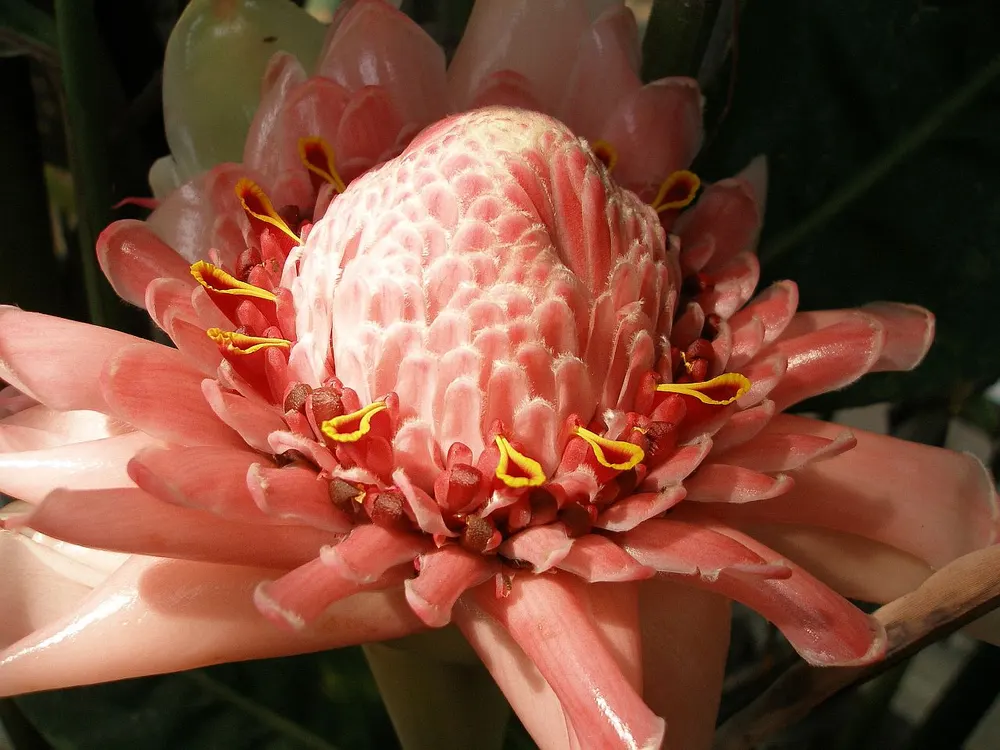
Photo: tanakawho, CC BY 2.0 (via Wikimedia Commons)
Torch Ginger
Etlingera elatior
Also known as Torch lily, Ginger flower, Bunga kantan, Kecombrang, Honje
Key benefits
✦Traditional uses
✦Long before it became a florist's favorite for its improbable, torch-shaped blooms, this towering ginger relative was a kitchen staple across Malaysia, Indonesia, and Thailand, where cooks slice the unopened flower bud into laksa, sambal, and salads for its sharp, citrusy, almost floral bite. In traditional Malay and Indonesian household medicine, the pounded rhizome and flower were rubbed on the skin as a natural deodorant and used to clean minor wounds and treat earaches, while a simple infusion was sipped after heavy meals to settle the stomach. Villagers also chewed the young shoots as a breath freshener. It remains one of the few gingers grown as much for the kitchen as for the garden.
How to grow & use it
✦The full apothecary for Torch Ginger
Traditional remedies and step-by-step preparations, a complete growing guide, and how to harvest, dry, and store it, all unlocked with HerbLens Unlimited.
- ✦Remedies & preparations
- ✦ Growing guide
- ✦Harvest & storage
From under $6 a month. Free plant identifications always included.
- ✦Lemongrass
- ✦Galangal
- ✦Kaffir lime leaf
- ✦Lemon zest with fresh ginger
- ✦Kaffir lime leaf
“When a dish needs a bright, citrus-and-clove spark that no other spice quite replicates.”
In Malaysia the sliced flower bud is called bunga kantan and is considered the signature ingredient of asam laksa, the tangy, fish-based noodle soup where a single sliced bud floating on top can define the whole dish.
Torch ginger is a widely eaten food plant across Southeast Asia and is not known to be toxic when used in ordinary culinary amounts. As with other members of the ginger family, those with a known Zingiberaceae allergy may react to it, and traditional medicinal preparations (as opposed to cooking) have not been well studied in clinical research, so their safety and effectiveness are not established. Pregnant or nursing individuals, and anyone on medication, should stick to normal food-level amounts and speak with a qualified healthcare professional before using it medicinally. When foraging, be certain of identification, since many tropical gingers resemble one another.