Photo: Daniel Fernicola, CC0 (via GBIF)
Sulphur Ginger
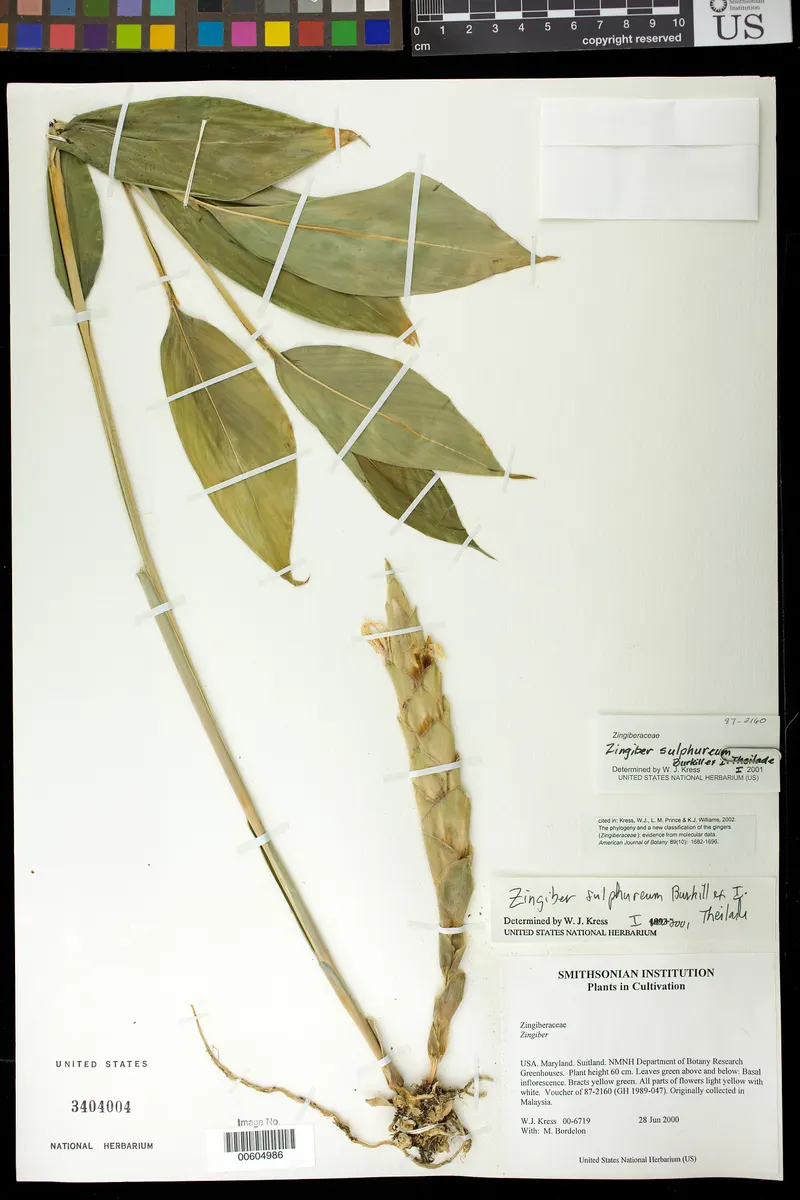
Zingiber sulphureum
Traditional uses
✦Zingiber sulphureum is a quiet, lesser-known cousin of the culinary and medicinal gingers, growing in the dappled shade of Southeast Asian rainforest floors rather than in any kitchen garden. Because it has rarely been cultivated or studied outside a handful of botanical surveys in Malaysia and Sumatra, detailed records of how local communities may have regarded its rhizome simply have not made it into accessible literature. What is certain is its lineage: it belongs to the genus Zingiber, a family of plants treasured across Asia for thousands of years, and its pale sulfur-colored blooms have long been the kind of detail that stops a forest botanist mid-step.
How to grow & use it
✦The full apothecary for Sulphur Ginger
Traditional remedies and step-by-step preparations, a complete growing guide, and how to harvest, dry, and store it, all unlocked with HerbLens Unlimited.
- ✦Remedies & preparations
- ✦ Growing guide
- ✦Harvest & storage
From under $6 a month. Free plant identifications always included.
“For the quiet corners of the rainforest floor, where a flash of sulfur yellow marks a wild ginger that few field guides have ever bothered to name.”
Its species name, sulphureum, is Latin for sulfur yellow, a nod to the pale golden hue of the flowers as they push up through the leaf litter of the forest floor.
This wild forest ginger has no established food or medicine use and no safety data exists for it. It should not be gathered or eaten, since it is easily confused with other ginger relatives, some of which can irritate the skin or stomach.