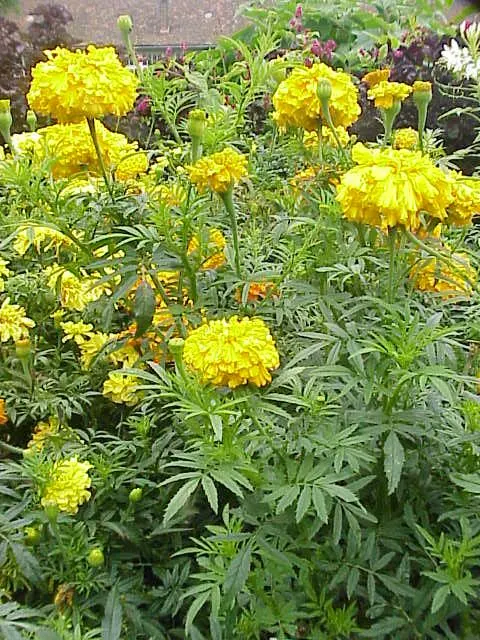
Photo: CC BY-SA 3.0 (via Wikimedia Commons)
Mexican Marigold
Tagetes erecta
Also known as Aztec Marigold, Cempasúchil, Big Marigold, African Marigold, Flower of the Dead
Key benefits
✦Traditional uses
✦Long before it brightened suburban flowerbeds, Tagetes erecta was cempasúchil to the Aztec and Nahua peoples, the marigold whose bold color and sharp scent were believed to guide the spirits of the dead home during what became Día de los Muertos. In traditional Mexican herbal practice, the petals were steeped into washes and teas used to comfort an upset stomach and to soothe irritated skin and minor wounds. The flower traveled with colonial trade routes into India, where it was folded into Ayurvedic skin preparations and grew so beloved as a garland and offering flower that fields of it now ring temples and market stalls across the country. Gardeners came to prize it for a second, more practical gift: its roots release compounds that discourage nematodes and other pests, making it a longtime companion planted alongside vegetables.
How to grow & use it
✦The full apothecary for Mexican Marigold
Traditional remedies and step-by-step preparations, a complete growing guide, and how to harvest, dry, and store it, all unlocked with HerbLens Unlimited.
- ✦Remedies & preparations
- ✦ Growing guide
- ✦Harvest & storage
From under $6 a month. Free plant identifications always included.
- ✦Calendula
- ✦Chamomile
- ✦Lemon balm
- ✦Calendula
- ✦Chamomile
“When the garden needs guarding and the table could use a little gold.”
In Mexico, cempasúchil petals are still scattered in bright pathways from the street to the home altar each November, because their color and scent are believed to be strong enough to lead departed loved ones back for the Day of the Dead.
Marigold is in the daisy family, so people sensitive to ragweed or chrysanthemums may react to it, and the sap or oil can irritate skin or increase sun sensitivity, so patch test first. The essential oil is too strong for internal use and is best avoided internally during pregnancy and breastfeeding, and pets may get mild stomach upset if they nibble the leaves or flowers.