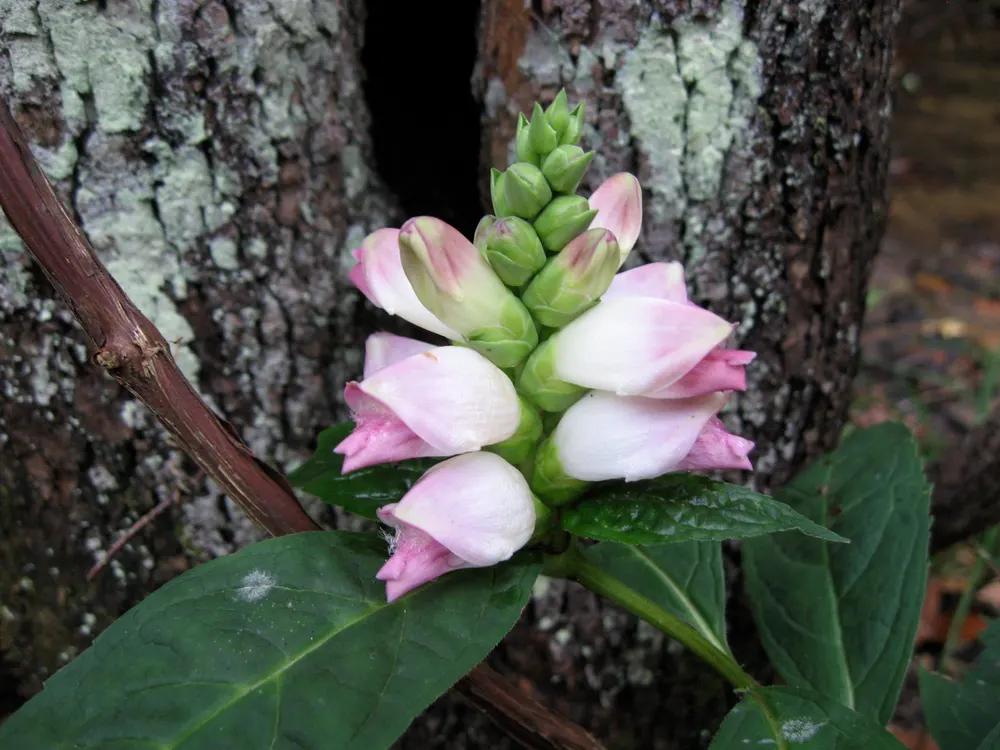
Photo: Mason Brock (Masebrock), Public domain (via Wikimedia Commons)
Turtlehead
Chelone glabra
Also known as White Turtlehead, Balmony, Snakehead, Shellflower, Codhead
Key benefits
✦Traditional uses
✦Turtlehead earned its keep in early American herbalism as one of the most reliably bitter plants a forager could find in a wet meadow. Native peoples and later the Eclectic physicians of the nineteenth century turned to its leaves as a tonic for a lagging appetite, sluggish digestion, and complaints of the liver, often reaching for it the way one might reach for gentian or dandelion root today. It also found a place in old remedies for intestinal worms and, applied as a cooled wash, for itchy or irritated skin. The plant's odd, hooded blossoms, said to resemble a turtle poking its head from its shell, made it easy to recognize and easy to remember by the herb gatherers who depended on it.
How to grow & use it
✦The full apothecary for Turtlehead
Traditional remedies and step-by-step preparations, a complete growing guide, and how to harvest, dry, and store it, all unlocked with HerbLens Unlimited.
- ✦Remedies & preparations
- ✦ Growing guide
- ✦Harvest & storage
From under $6 a month. Free plant identifications always included.
- ✦Dandelion root
- ✦Gentian
- ✦Boneset
- ✦Gentian root
- ✦Dandelion root
“For the sluggish afternoon that calls for a sharp, honest bitter to wake the digestion back up.”
Turtlehead is the sole host plant for the Baltimore checkerspot butterfly, whose caterpillars will eat nothing else, which makes a stand of this wildflower a small, private nursery for one of the region's most striking butterflies.
Intensely bitter, and larger amounts act as a laxative and can cause nausea; best avoided during pregnancy and breastfeeding.