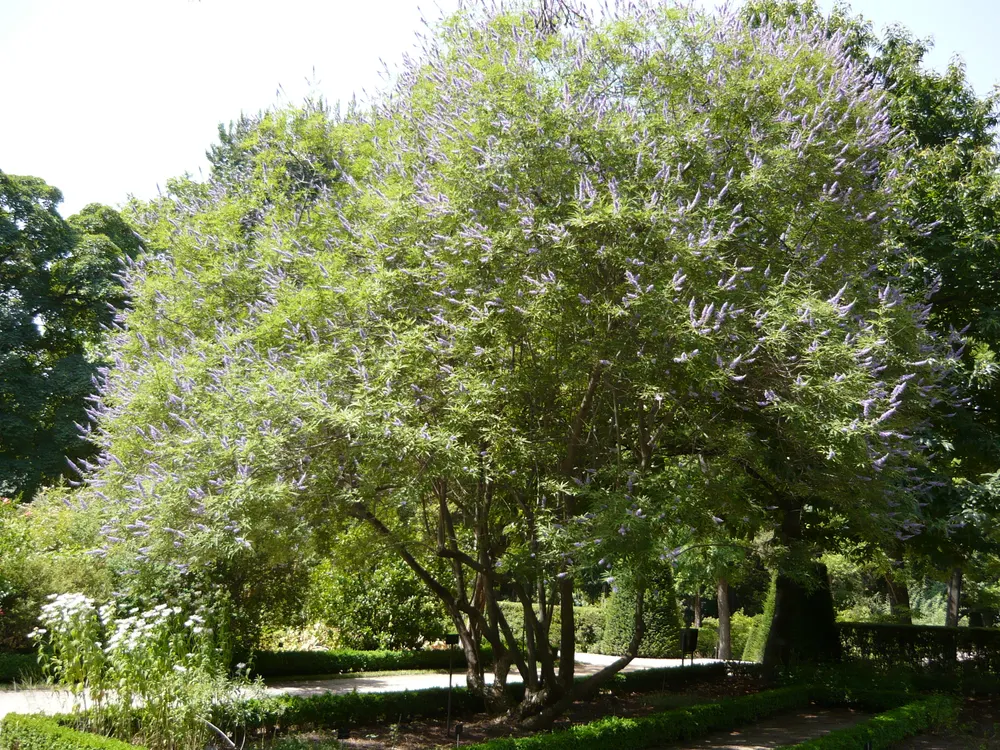
Photo: Cillas, CC BY-SA 4.0 (via Wikimedia Commons)
Chasteberry
Vitex agnus-castus
Also known as Vitex, Monk's Pepper, Chaste Tree, Abraham's Balm
Key benefits
✦Traditional uses
✦Chasteberry has a long history in Mediterranean and European herbalism, where healers going back to the ancient Greeks turned to its peppery berries to help women navigate the shifting tides of the menstrual cycle. Hippocrates himself wrote of the plant, and by the Middle Ages it had become a staple of the herbal repertoire for easing what was then called "women's complaints." Traditionally, it has been used to help ease premenstrual discomfort, support cycle regularity, and calm breast tenderness, valued above all for its slow, steadying influence rather than any quick fix. Generations of herbalists came to think of it less as a remedy for a single symptom and more as a long-term ally for hormonal rhythm.
Growing guide
✦Fresh to dried
✦Traditional preparations
✦Chasteberry Cycle Tea
A gentle, traditional preparation used to support hormonal balance and ease the discomforts of the menstrual cycle over time.
How it's made. Traditionally, a tea is made by lightly crushing 1 teaspoon of dried chasteberries and steeping them in 250 ml of just-boiled water for 10 to 15 minutes, covered. Strain and drink one cup daily, consistently, as traditional use suggests benefits build gradually over several cycles rather than overnight.
Simple Chasteberry Tincture
A concentrated liquid extract favored in traditional herbal practice for its convenience and long shelf life.
How it's made. Traditionally prepared by steeping dried berries in alcohol at a 1:5 ratio for four to six weeks, shaking occasionally, then straining. A modest traditional dose is 20 to 30 drops diluted in water, taken once in the morning.
- ✦Red Raspberry Leaf
- ✦Dong Quai
- ✦Shatavari
- ✦Shatavari
- ✦Dong Quai
“For the long, quiet work of finding your rhythm again, month after patient month.”
Chasteberry earned its common name and the medieval nickname "monk's pepper" because monks reportedly chewed the peppery-tasting berries to help maintain vows of celibacy, a use modern research has never borne out, but the legend stuck to the plant's name for centuries.
Chasteberry acts on hormonal signaling, so it shouldn't be combined with hormonal birth control, hormone therapy, fertility medications, or dopamine-affecting drugs without a doctor's guidance. It isn't recommended during pregnancy or breastfeeding.