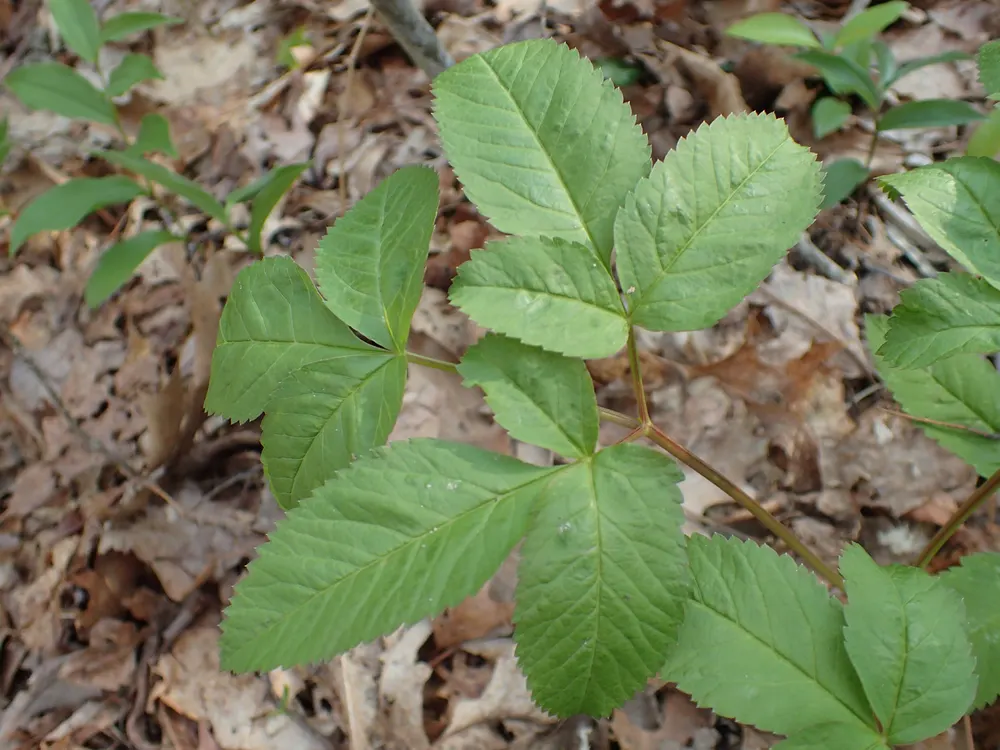
Photo: Evan M. Raskin, CC BY 4.0 (via Wikimedia Commons)
Bear Root
Ligusticum canadense
Also known as Canadian Lovage, Nondo, St. Anthony's Turnip, Canada Licorice-root, Wild Lovage
Key benefits
✦Traditional uses
✦Deep in the coves of the Appalachians, bear root has long stood in for its more famous western cousin, osha, sharing the same warming, pungent root and much of the same reputation. Cherokee healers and generations of mountain families chewed a piece of the dried root or steeped it into tea at the first sign of a cold, a sore throat, or a heavy chest. It was also carried as a traveling root, tucked into a pocket to be nibbled on cold mornings, and added to tonics meant to settle an uneasy stomach after a rich meal. The name bear root comes from old woodland lore holding that bears, upon waking from winter sleep, dig for the root and eat it, a story shared with several of its Ligusticum relatives across the continent.
How to grow & use it
✦The full apothecary for Bear Root
Traditional remedies and step-by-step preparations, a complete growing guide, and how to harvest, dry, and store it, all unlocked with HerbLens Unlimited.
- ✦Remedies & preparations
- ✦ Growing guide
- ✦Harvest & storage
From under $6 a month. Free plant identifications always included.
- ✦Wild Ginger
- ✦Elderberry
- ✦Thyme
- ✦Osha Root
- ✦Angelica Root
“When the first chill settles into the chest and throat, reach for the warming root the mountains called bear root.”
Because true osha (Ligusticum porteri) grows slowly in the Rocky Mountains and has come under harvesting pressure, herbalists in the East have increasingly turned to bear root as a more sustainable, locally abundant stand-in with a strikingly similar aroma and traditional use.
Bear root belongs to the carrot family, which includes deadly lookalikes like poison hemlock and water hemlock, so it should never be foraged or eaten without expert identification. It may also interact with blood-thinning medications and is traditionally avoided during pregnancy.