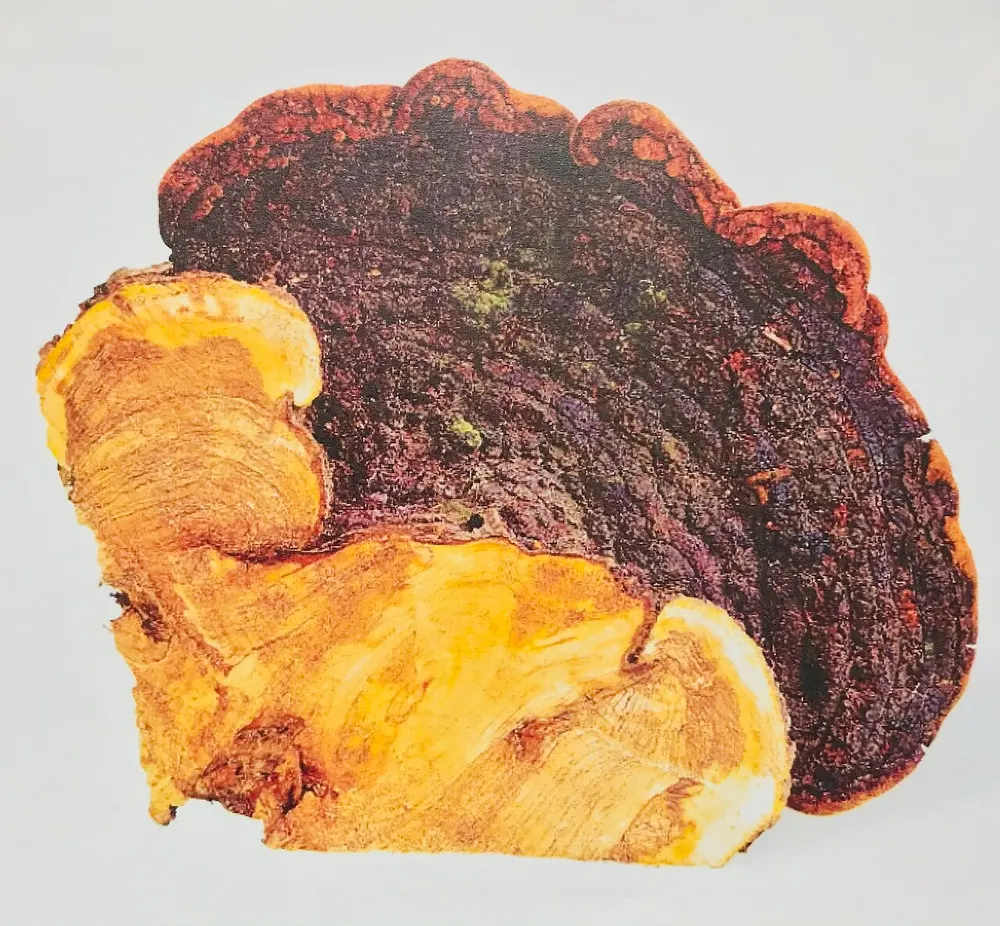
Photo: Maszk, CC BY-SA 4.0 (via Wikimedia Commons)
Black Hoof Mushroom
Phellinus linteus
Also known as Sanghwang Mushroom, Meshimakobu, Mesima, Song-gen, Phellinus
Key benefits
✦Traditional uses
✦In Korea, sanghwang has been gathered from old mulberry trees for centuries and simmered into dark, bitter decoctions to fortify digestion and general vitality, especially in people recovering from long illness. Chinese and Japanese herbalists knew it too, prizing it as a tonic for the stomach and a support for the body's own defenses long before modern labs turned their attention to its polysaccharides. Because a single fruiting body could take years to grow hard as bone on the trunk of a living tree, it was gathered sparingly and treated with real reverence, more a valued tonic than an everyday cup. That scarcity, and the labor of finding and cutting it, kept it close to home remedies passed within families rather than sold widely at market.
Growing guide
✦Fresh to dried
✦Traditional preparations
✦Sanghwang Decoction
The traditional way this hard, woody fungus is prepared, a long slow simmer that coaxes out its deep, faintly bitter, earthy flavor and color.
How it's made. Traditionally, 5 to 10 grams of dried sliced Phellinus linteus are simmered in about 1 liter of water over low heat for 1 to 2 hours, then strained and sipped warm, often in small cups throughout the day.
- ✦Reishi
- ✦Astragalus
- ✦Licorice Root
- ✦Turkey Tail
- ✦Chaga
“For the quiet, steady kind of support that has to be earned slowly, one long-simmered cup at a time.”
The Korean name 'sanghwang' draws on the character for mulberry, a nod to the fact that this fungus was traditionally found growing wild almost exclusively on old mulberry trees, the very same trees Korean farmers kept for feeding silkworms.
Phellinus linteus is not known to be toxic when properly identified and prepared as a traditional decoction, but it is a potent, immune-active fungus and deserves real caution. Because it may stimulate immune activity, it is traditionally avoided by people with autoimmune conditions or those taking immunosuppressant medication, and it may also interact with blood-thinning medications due to effects on platelet function, so it is best stopped well before any scheduled surgery. Pregnant or nursing individuals should avoid it, since safety data is lacking. As with any wild fungus, correct identification matters greatly, and wild-harvested specimens should only come from an experienced, knowledgeable forager. Talk with a qualified healthcare provider before using Phellinus linteus, especially if you take other medications or manage a chronic health condition.