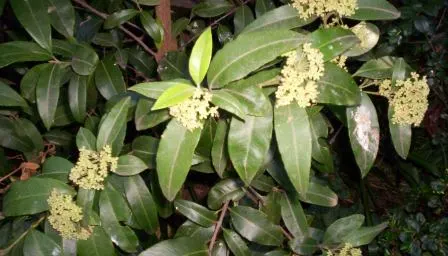
Photo: HelloMojo, CC BY-SA 3.0 (via Wikimedia Commons)
Lemon Myrtle
Backhousia citriodora
Also known as Lemon ironwood, Sweet verbena tree, Citron-scented myrtle
Key benefits
✦Traditional uses
✦Long before European settlement, Aboriginal peoples of Queensland's rainforest coast crushed lemon myrtle leaves both as a food flavoring and as a traditional remedy for headaches, colds, and skin complaints, prizing the leaf for a lemon fragrance sharper than any citrus fruit. Lemon myrtle carries the highest known concentration of citral of any plant on earth, which is what gives the crushed leaf its startling, sherbet-bright scent. Australian bush tucker cooks later carried the leaf into modern kitchens, where it became one of the signature native flavors of Australian cuisine. Traditionally, a simple leaf tea has been sipped after meals to settle the stomach and to soothe a scratchy throat.
How to grow & use it
✦The full apothecary for Lemon Myrtle
Traditional remedies and step-by-step preparations, a complete growing guide, and how to harvest, dry, and store it, all unlocked with HerbLens Unlimited.
- ✦Remedies & preparations
- ✦ Growing guide
- ✦Harvest & storage
From under $6 a month. Free plant identifications always included.
- ✦Ginger
- ✦Honey
- ✦Lemongrass
- ✦Lemongrass
- ✦Lemon verbena
“For the brightest, sunniest cup of citrus in the whole pantry.”
Lemon myrtle leaves contain up to 90 to 98 percent citral, the compound responsible for lemon scent, making them the most citral-rich leaf ever measured, well ahead of lemongrass or fresh lemon peel.
Lemon myrtle leaf is fine as a culinary flavoring or mild tea in ordinary amounts. The essential oil, though, is highly concentrated in citral and should never be taken internally or applied undiluted to skin, and should be kept well away from children and pets.