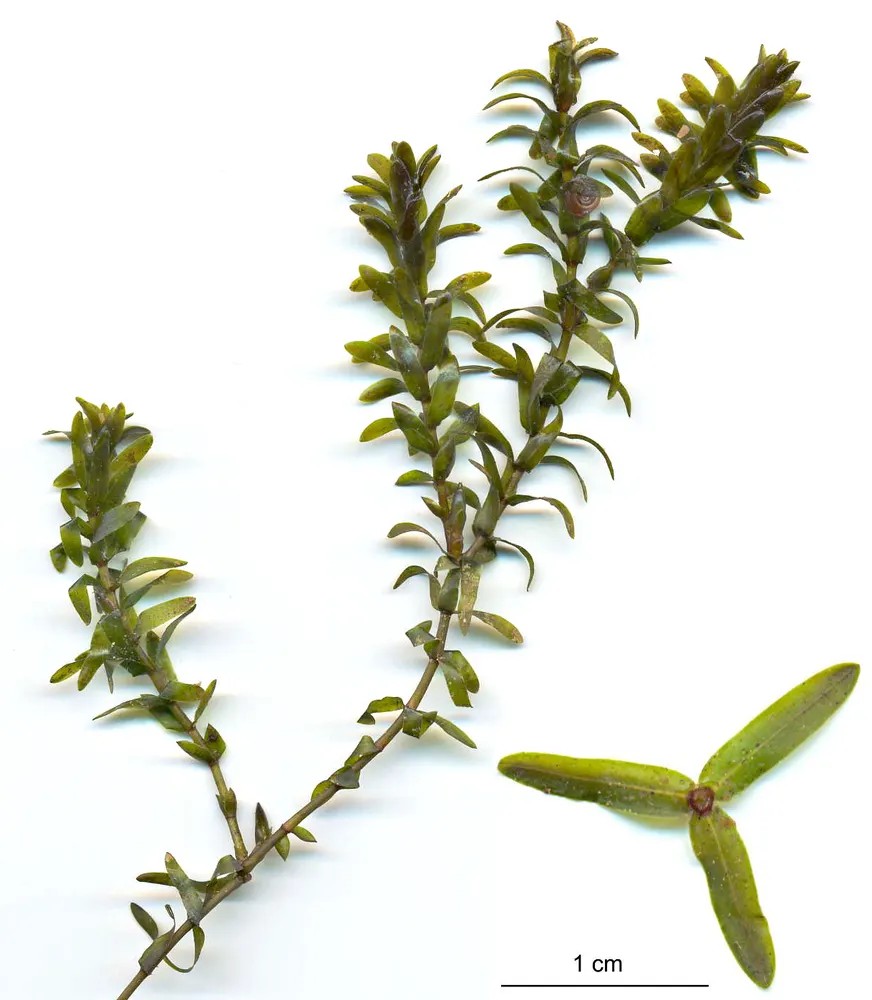
Photo: Christian Fischer, CC BY-SA 3.0 (via Wikimedia Commons)
Canadian Waterweed
Elodea canadensis
Also known as American Waterweed, Canadian Pondweed, Anacharis, Ditch-moss
Key benefits
✦Traditional uses
✦Canadian waterweed has never been a kitchen or medicine cabinet herb. Its real history belongs to ponds and aquariums, not apothecary shelves. When it was carried from North America to Britain in the 1830s, it spread through canals and waterways so quickly that Victorian naturalists nicknamed it a nuisance almost as fast as they admired it, and it soon became one of the most familiar plants in glass aquariums and garden ponds around the world. Generations of biology students have also met it under a microscope, watching its single-layered leaf cells stream with visible cytoplasm and bead tiny bubbles of oxygen when held to the light, a simple, quietly wonderful demonstration of photosynthesis at work.
How to grow & use it
✦The full apothecary for Canadian Waterweed
Traditional remedies and step-by-step preparations, a complete growing guide, and how to harvest, dry, and store it, all unlocked with HerbLens Unlimited.
- ✦Remedies & preparations
- ✦ Growing guide
- ✦Harvest & storage
From under $6 a month. Free plant identifications always included.
- ✦Hornwort
- ✦Water lily
- ✦Water lettuce
- ✦Egeria densa (Brazilian waterweed)
“For the pond that needs a little more oxygen, a little more shade, and a soft green hiding place for shy fish, not for the medicine cabinet.”
A single broken fragment of Canadian waterweed, sometimes just an inch of stem, can root and grow into an entirely new plant, which is exactly how it colonized ponds and canals across Europe, Asia, and Australasia after leaving its native range.
Canadian waterweed is not known to be toxic but has no history of food or medicinal use. It is also classified as invasive in many areas, so never release or plant it in natural waterways.