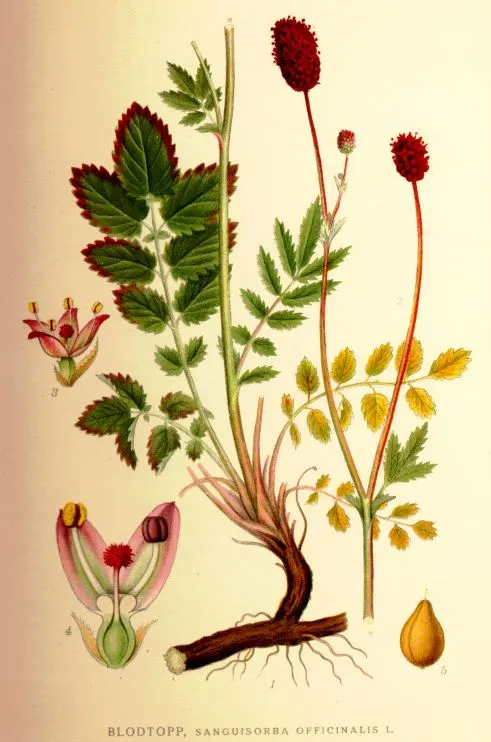
Photo: Carl Axel Magnus Lindman, Public domain (via Wikimedia Commons)
Great Burnet
Sanguisorba officinalis
Also known as Di Yu, Garden Burnet, Official Burnet, Bloodwort
Key benefits
✦Traditional uses
✦Great burnet has been treasured for centuries as one of the great wound herbs, prized above all for its reputation as an astringent that calms bleeding. In traditional Chinese medicine, the dried root, known as di yu, has been used for generations to cool the blood, settle dysentery, and ease bleeding hemorrhoids. European folk healers reached for the same astringent root and leaves to dress wounds, calm burns, and soothe an unsettled stomach. Its deep wine-red flower spikes also made it a familiar, well-loved sight along old hedgerows and cottage garden beds, admired as much for its looks as for its medicine.
How to grow & use it
✦The full apothecary for Great Burnet
Traditional remedies and step-by-step preparations, a complete growing guide, and how to harvest, dry, and store it, all unlocked with HerbLens Unlimited.
- ✦Remedies & preparations
- ✦ Growing guide
- ✦Harvest & storage
From under $6 a month. Free plant identifications always included.
- ✦Yarrow
- ✦Plantain
- ✦Shepherd's Purse
- ✦Yarrow
- ✦Agrimony
“For an old-fashioned, steady ally when you want the comfort of an astringent herb for wounds, an unsettled stomach, or a garden bed that thrives in damp ground.”
The genus name Sanguisorba comes from the Latin sanguis, meaning blood, and sorbere, meaning to soak up or absorb, a name given directly because of the plant's long-standing reputation for stanching wounds.
Great burnet is generally safe as an occasional tea, but its blood-stanching action means anyone on blood-thinning medication or with a clotting disorder should be cautious. Its tannins can upset the stomach or reduce mineral absorption if used heavily, and it isn't recommended during pregnancy or breastfeeding.