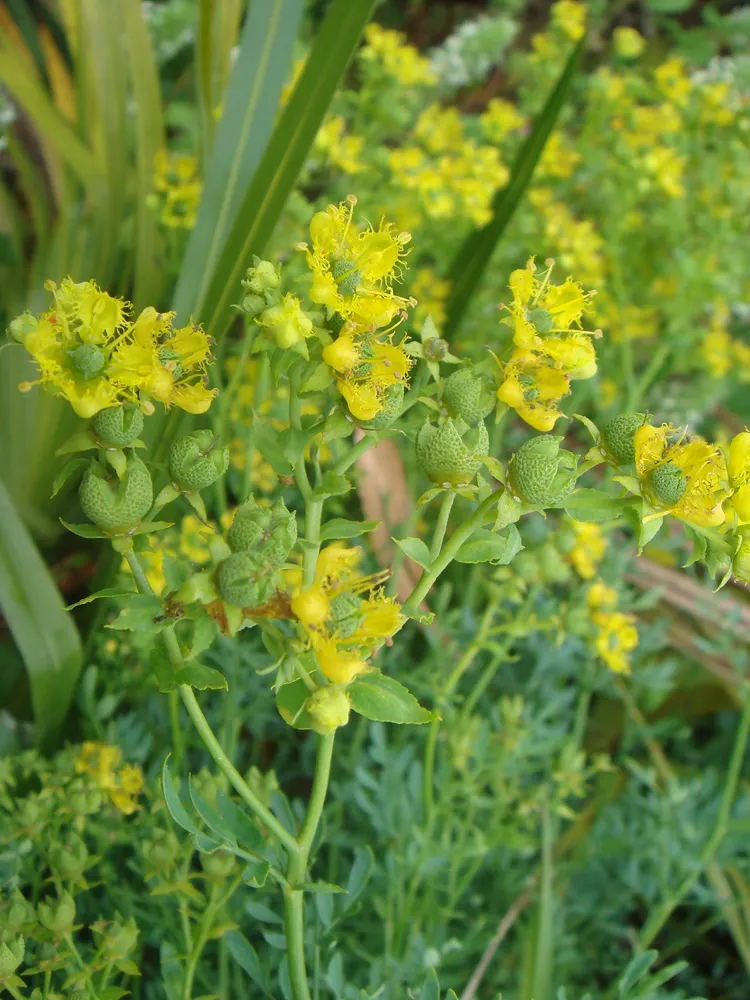
Photo: Xemenendura, CC BY-SA 4.0 (via Wikimedia Commons)
Fringed Rue
Ruta chalepensis
Also known as Fringed Rue, Egyptian Rue, Herb of Grace, Ruda
Key benefits
✦Traditional uses
✦Fringed rue has walked through Mediterranean history as both a protective charm and a working herb. The Greeks and Romans planted it near doorways and kitchen gardens to keep insects and, they believed, misfortune at bay, and Dioscorides and Pliny the Elder both wrote of it at length. In later centuries it became known in England as the herb of grace, scattered by priests for blessing before it fell out of everyday use. Because rue is a plant that demands real caution, its story today lives mostly in the garden and in folklore rather than in the kitchen or medicine cabinet.
How to grow & use it
✦The full apothecary for Fringed Rue
Traditional remedies and step-by-step preparations, a complete growing guide, and how to harvest, dry, and store it, all unlocked with HerbLens Unlimited.
- ✦Remedies & preparations
- ✦ Growing guide
- ✦Harvest & storage
From under $6 a month. Free plant identifications always included.
- ✦Roses (traditional companion planting)
- ✦Fig trees (old-world companion pairing)
- ✦Lavender (shared dry, sunny garden conditions)
- ✦Wormwood (a safer traditional garden pest deterrent)
- ✦Tansy (another historic insect repelling herb)
“For the gardener who wants a silvery, old-world hedge with a story older than the herbals themselves, not for the medicine cabinet.”
Rue's old English name, herb of grace, comes from its use in Catholic rituals, where sprigs were dipped in holy water for blessing. Shakespeare gave it the same name in Hamlet, when Ophelia hands out rue and calls it herb of grace o' Sundays.
Fringed rue is a genuinely hazardous plant and is not treated here as a safe herbal remedy. Its sap contains furanocoumarins that cause severe phototoxic burns and blistering on skin exposed to sunlight after contact, a reaction sometimes called rue burn. Taken internally beyond the tiniest culinary trace, rue is toxic, can damage the liver and kidneys, and has a long, dangerous history as an abortifacient capable of causing miscarriage, so it must never be used during pregnancy or by anyone who could become pregnant. It is not recommended for ingestion, tea, or supplement use under any circumstances, and should be kept well away from children and pets. Grow and handle it as an ornamental or garden plant only, always with gloves, and speak with a qualified healthcare professional before considering any other use.