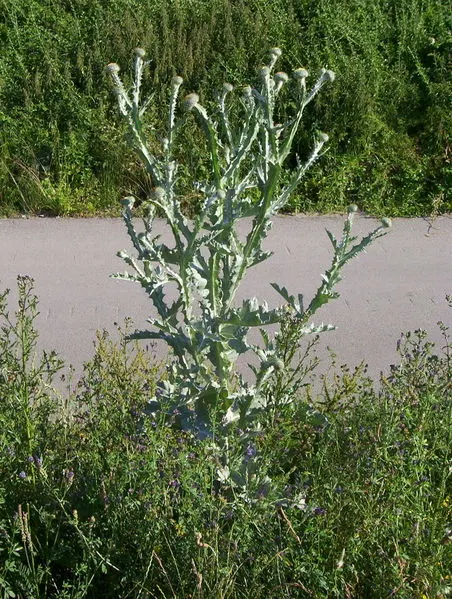
Photo: penarc, Public domain (via Wikimedia Commons)
Scotch Thistle
Onopordum acanthium
Also known as Cotton Thistle, Woolly Thistle, Scots Thistle, Silver Thistle
Key benefits
✦Traditional uses
✦Long before it became a stubborn roadside weed to modern eyes, cotton thistle held a real place in the European herbal cabinet. Old herbalists like Culpeper wrote of the root and leaf being boiled or bruised into applications for sores and skin complaints, and country folk drank the bitter leaf as a tonic to wake up a tired appetite before meals. Its silvery, cobweb-soft leaves and towering purple crowns also made it a familiar sight in cottage gardens grown simply for their dramatic, architectural beauty. Most famously, this thistle (or one very like it) is the plant behind Scotland's national emblem, carried into legend as a humble weed that once saved a sleeping clan.
How to grow & use it
✦The full apothecary for Scotch Thistle
Traditional remedies and step-by-step preparations, a complete growing guide, and how to harvest, dry, and store it, all unlocked with HerbLens Unlimited.
- ✦Remedies & preparations
- ✦ Growing guide
- ✦Harvest & storage
From under $6 a month. Free plant identifications always included.
- ✦Dandelion root
- ✦Milk thistle seed
- ✦Chamomile
- ✦Milk thistle
- ✦Artichoke leaf
“For a plant that turns rough, forgotten ground into silver and thistledown, and carries an old soldier's legend in every spine.”
According to old Scottish legend, a barefoot Norse raider crept toward a sleeping clan camp under cover of darkness, only to step squarely on a thistle and cry out in pain, waking the defenders in time to repel the attack. The grateful clan adopted the thistle as Scotland's national emblem from that night on.
This plant is covered in sharp spines, so handle it with gloves. As a daisy-family plant it may cause a reaction in people sensitive to ragweed or chrysanthemums.