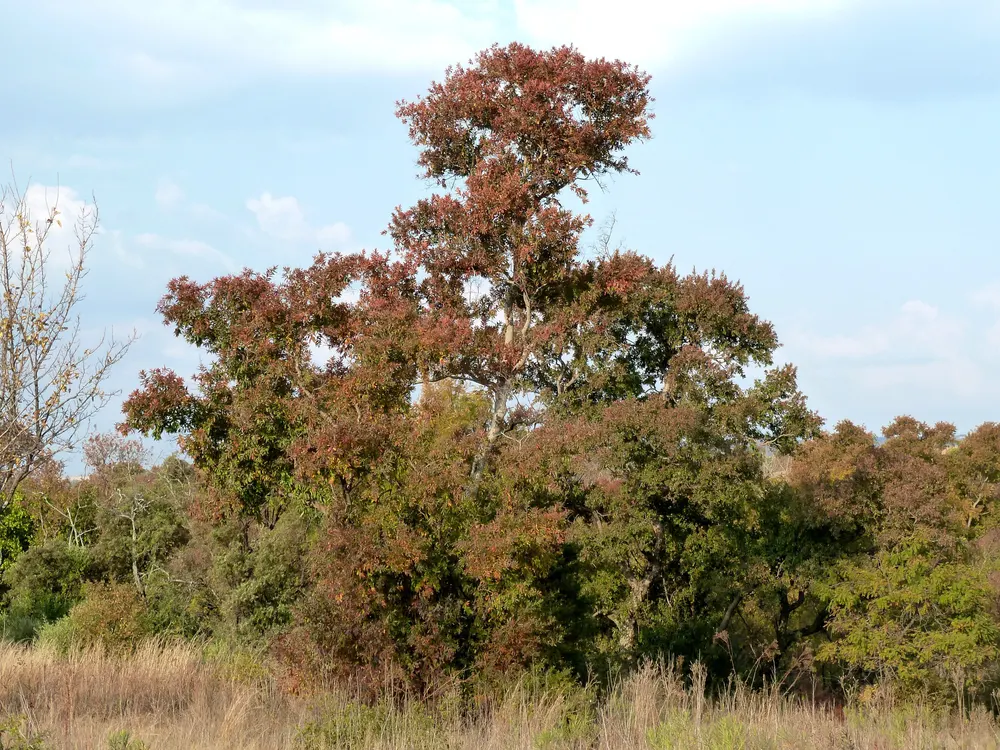
Photo: JMK, CC BY-SA 3.0 (via Wikimedia Commons)
River Bushwillow
Combretum erythrophyllum
Also known as Vaderlandswilg (Afrikaans), Bushveld Bushwillow
Key benefits
✦Traditional uses
✦Long before it was ever planted for beauty, the river bushwillow held its ground along the banks of southern Africa's rivers, its roots knitting the soil together against the pull of the current. Rural communities in its native range have relied on its tough, straight-grained wood for fencing poles, tool handles, and fuel for generations, and its dense summer canopy has offered shade to livestock, travelers, and homesteads alike. Researchers at South African universities have studied extracts from its leaves for possible antimicrobial activity, part of a broader look at the many species in the Combretum genus, though this remains a subject of laboratory study rather than an established folk remedy. Its greatest and most trusted legacy is quieter than medicine: a riverside anchor, a shade giver, and, come autumn, a blaze of color rare among African trees.
How to grow & use it
✦The full apothecary for River Bushwillow
Traditional remedies and step-by-step preparations, a complete growing guide, and how to harvest, dry, and store it, all unlocked with HerbLens Unlimited.
- ✦Remedies & preparations
- ✦ Growing guide
- ✦Harvest & storage
From under $6 a month. Free plant identifications always included.
- ✦Cape willow (Salix mucronata)
- ✦Waterberry (Syzygium cordatum)
- ✦Common reed (Phragmites australis)
- ✦Karee (Searsia lancea)
- ✦Other indigenous Combretum species for riverbank plantings
“Choose the river bushwillow when you want a living anchor for a riverbank, a season of autumn fire in a bushveld garden, and a tree the birds will thank you for.”
Its species name, erythrophyllum, comes from the Greek for red leaf, and it earns the title honestly: it is one of the few indigenous southern African trees that puts on a genuine, fiery autumn color display, a rare sight in a region where most native trees stay green or simply drop their leaves without ceremony.
River bushwillow has no established tradition of safe human use, and related Combretum species have caused fatal poisoning in livestock, so its leaves, bark, and seeds should never be eaten by people or animals.