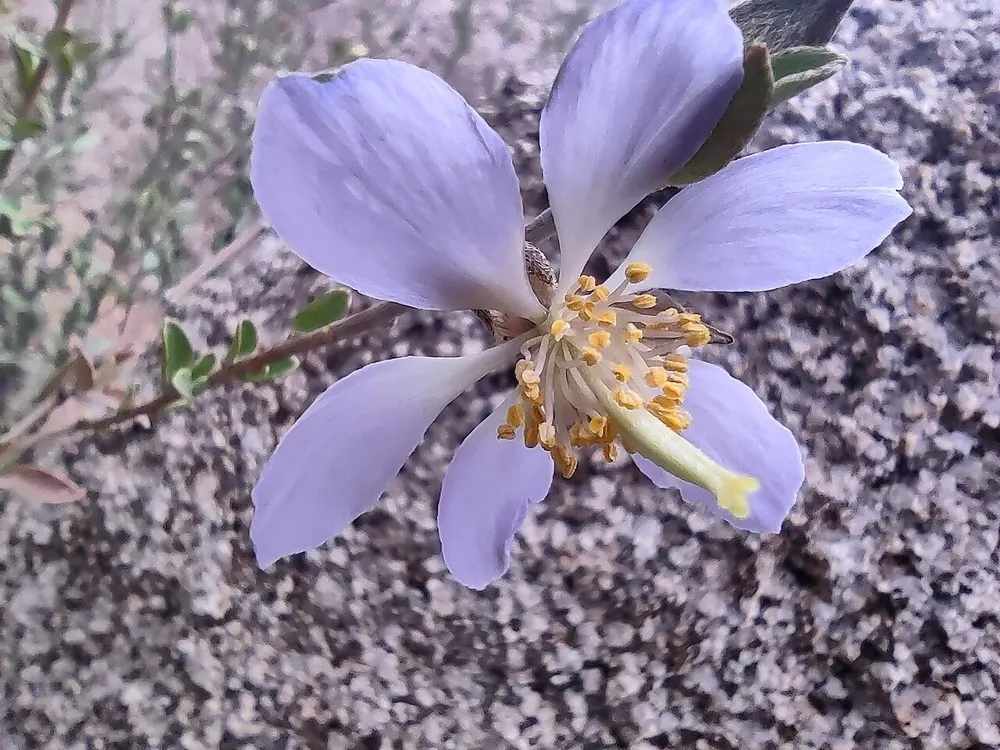
Photo: Mauricio Calderón, CC BY 4.0 (via Wikimedia Commons)
Blue Setchellanthus
Setchellanthus caeruleus
Also known as Setchellanthus
Key benefits
✦Traditional uses
✦Setchellanthus caeruleus is one of botany's great loners, the single living species in its own plant family, Setchellanthaceae, found nowhere on Earth but a handful of dry limestone valleys in south-central Mexico. Unlike so many of its desert-dwelling neighbors, it never wove itself into local herbal, culinary, or craft tradition, and no historical record credits any part of it with medicinal or food use among the region's communities. Its real story belongs to botanists, who puzzled for nearly a century over where to place it before DNA studies finally confirmed it deserved a family entirely of its own. What traditional value it holds today is quiet and ecological, a small, thorny anchor of the Tehuacán-Cuicatlán drylands that turns sky blue after the rains and asks little of the people who pass it by.
How to grow & use it
✦The full apothecary for Blue Setchellanthus
Traditional remedies and step-by-step preparations, a complete growing guide, and how to harvest, dry, and store it, all unlocked with HerbLens Unlimited.
- ✦Remedies & preparations
- ✦ Growing guide
- ✦Harvest & storage
From under $6 a month. Free plant identifications always included.
“For the rare and the resilient, a single blue-flowered survivor of Mexico's driest limestone hills.”
Setchellanthus caeruleus is so distinctive that botanists eventually gave it a plant family entirely of its own, Setchellanthaceae, with this single species as its sole member. Named in honor of American botanist William Albert Setchell, it was long shuffled among the caper and mustard relatives until molecular studies in the early 2000s confirmed it stood apart from every other flowering plant on the family tree.
Setchellanthus caeruleus has no history of use as food or medicine, so it should not be eaten or applied to the skin.