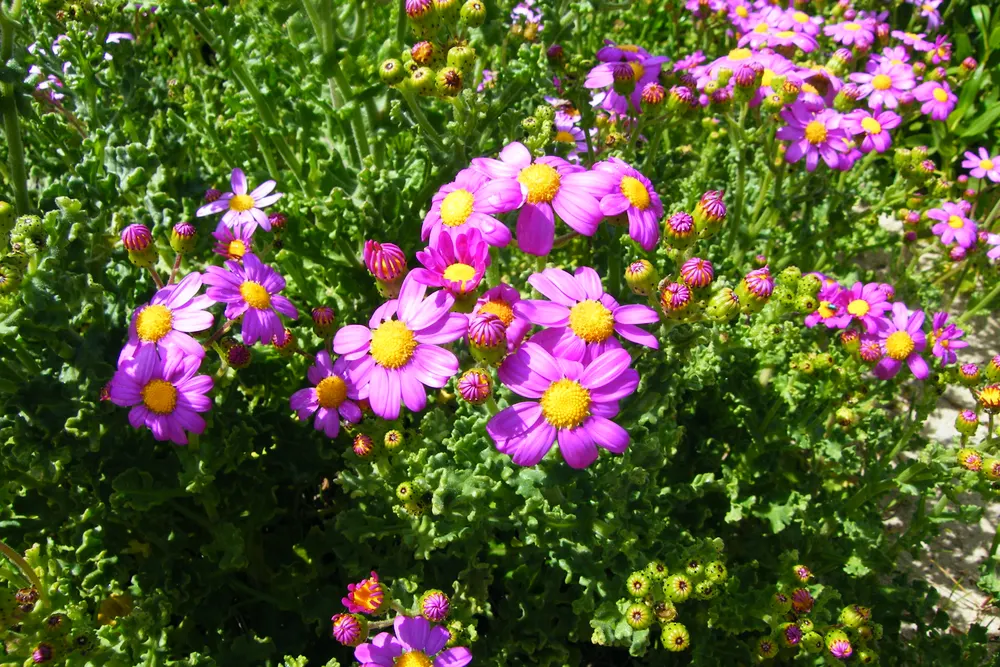
Photo: Andrew massyn, Public domain (via Wikimedia Commons)
Purple Ragwort
Senecio elegans
Also known as Wild Cineraria, Purple Groundsel, Elegant Ragwort, Cape Aster
Key benefits
✦Traditional uses
✦Purple ragwort is native to the sandy coastal fynbos of South Africa's Cape region, where its cheerful purple daisy blooms have long brightened dune scrub and rocky slopes. Gardeners in Mediterranean and coastal climates around the world adopted it for exactly the qualities that let it thrive at home, a tolerance for salt wind, drought, and thin sandy soil that few flowering plants can match. Unlike many of its daisy-family cousins, it was never taken up as a kitchen or medicine cabinet herb, and travelers to Australia and California often first meet it not in an apothecary garden but along roadsides and coastal bluffs, where it has naturalized and now grows wild far from home. Its story belongs to the garden and the rangeland rather than to traditional healing, and it is best appreciated simply for the color it brings to a wild, windswept border.
How to grow & use it
✦The full apothecary for Purple Ragwort
Traditional remedies and step-by-step preparations, a complete growing guide, and how to harvest, dry, and store it, all unlocked with HerbLens Unlimited.
- ✦Remedies & preparations
- ✦ Growing guide
- ✦Harvest & storage
From under $6 a month. Free plant identifications always included.
“For the wild, windswept corner of a coastal garden where little else will bloom so easily.”
Purple ragwort belongs to the enormous genus Senecio, which includes more than a thousand species and ranges from tiny alpine daisies to towering African tree groundsels, making it one of the most varied plant genera in the world.
Purple ragwort contains pyrrolizidine alkaloids, the same class of toxic compounds found throughout the Senecio genus. These are hepatotoxic, meaning they damage the liver, and are considered potentially carcinogenic with repeated exposure. The plant is well documented as poisonous to grazing livestock, and it is not safe for human consumption in any form, whether fresh, dried, or brewed as tea. Handling the foliage can also cause mild skin irritation in sensitive individuals, so gloves are sensible when pruning or weeding it out. Keep it away from grazing animals, small children, and pets, and never use it as a substitute for a culinary or medicinal herb. This entry is provided for identification and garden reference only. If you have questions about a suspected exposure, contact a poison control center or a qualified medical professional right away, and consult a licensed herbalist or physician before using any plant medicinally.