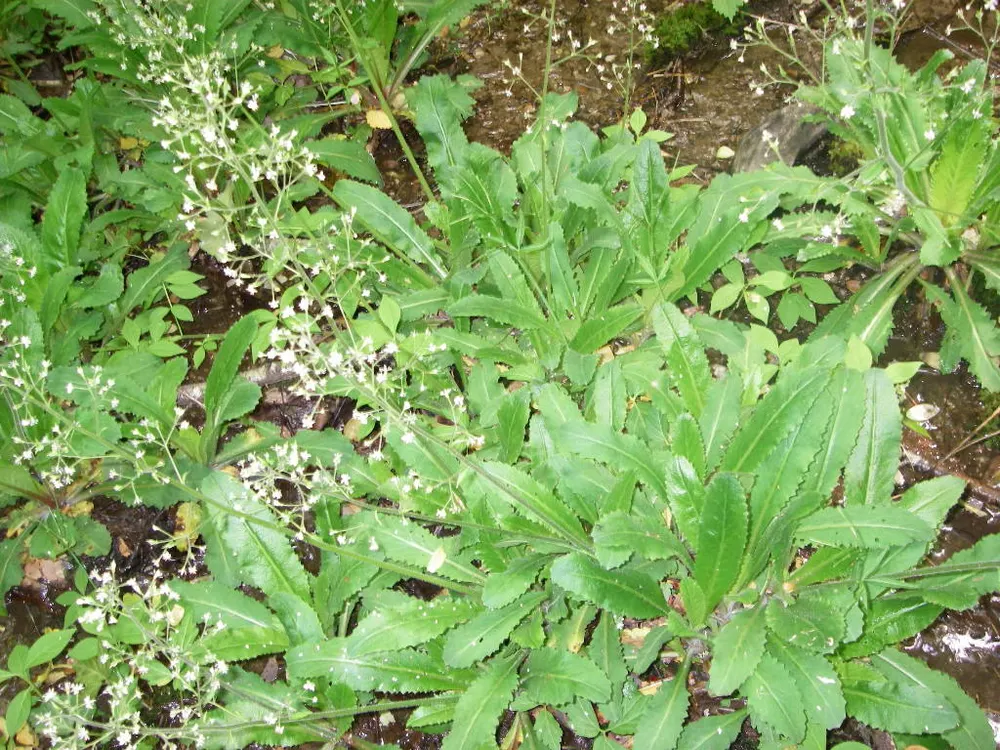
Photo: The original uploader was Halpaugh at English Wikipedia., CC BY-SA 3.0 (via Wikimedia Commons)
Mountain Lettuce
Saxifraga micranthidifolia
Also known as Brook Lettuce, Deertongue, Branch Lettuce
Key benefits
✦Traditional uses
✦Long before grocery store lettuce reached the mountains, families in the southern Appalachians watched the wet cliffs and stream banks each spring for the pale green rosettes of mountain lettuce. It was one of the first fresh greens of the season, gathered while the leaves were still young and tender, and eaten raw in salads or wilted quickly with a bit of fat, much like the region's beloved creasy greens and poke sallet traditions. It was valued simply as food, a welcome bite of green after a long winter, rather than as a medicine.
How to grow & use it
✦The full apothecary for Mountain Lettuce
Traditional remedies and step-by-step preparations, a complete growing guide, and how to harvest, dry, and store it, all unlocked with HerbLens Unlimited.
- ✦Remedies & preparations
- ✦ Growing guide
- ✦Harvest & storage
From under $6 a month. Free plant identifications always included.
- ✦Watercress
- ✦Ramps
- ✦Chickweed
- ✦Watercress
- ✦Mache (corn salad)
“For the first green taste of spring, gathered where cold water never stops moving.”
The genus name Saxifraga comes from the Latin saxum, meaning rock, and frangere, to break, a nod to how these plants seem to split stone itself as their roots find purchase in the thinnest cracks of wet cliff faces.
Mountain lettuce is a traditional foraged green and not known to be toxic, but since it grows in stream spray and seepage, rinse it well as wild water can carry contaminants like Giardia.