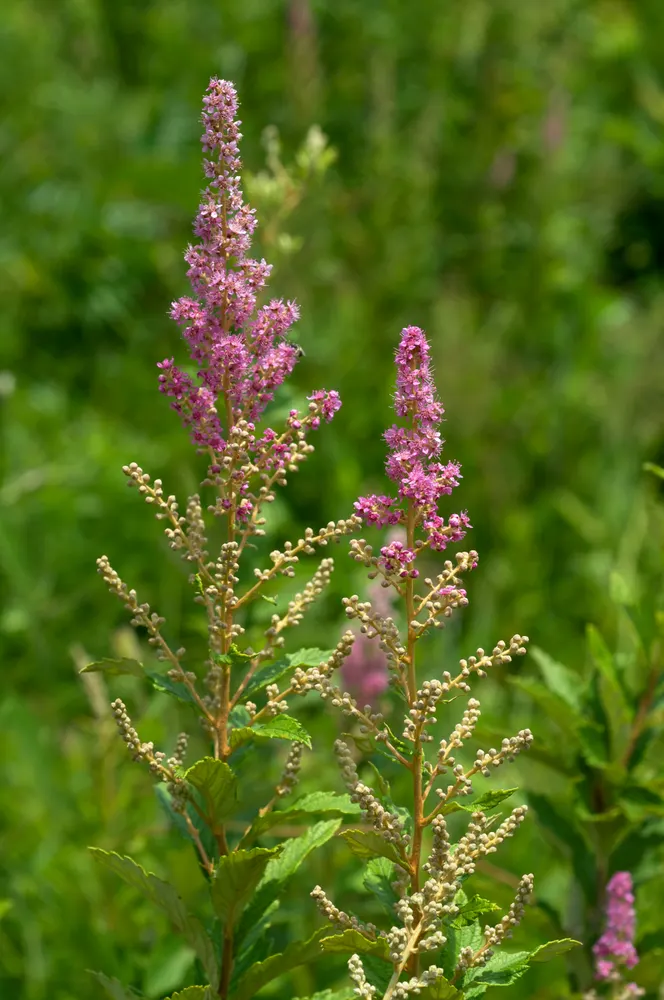
Photo: Eric Hunt, CC BY-SA 4.0 (via Wikimedia Commons)
Steeplebush
Spiraea tomentosa
Also known as Steeplebush, Hardhack, Silverleaf Spiraea, Rose-colored Spiraea
Key benefits
✦Traditional uses
✦Long before it had a place in any garden bed, steeplebush grew wild in the wet meadows of the Northeast, where its tall pink-purple spires became a familiar late-summer sight. Several Native American nations, including the Iroquois and other Northeastern peoples, brewed the leaves into a simple astringent tea to settle an unsettled stomach and ease occasional loose bowels. The tough, woody stems earned it the nickname hardhack among early settlers, who found the shrub nearly impossible to clear from a field, while the flower spikes reminded people of little church steeples rising over the marsh grass. Over time it settled into the quiet role of a reliable, homely tonic, the kind of plant every household simply knew how to use.
How to grow & use it
✦The full apothecary for Steeplebush
Traditional remedies and step-by-step preparations, a complete growing guide, and how to harvest, dry, and store it, all unlocked with HerbLens Unlimited.
- ✦Remedies & preparations
- ✦ Growing guide
- ✦Harvest & storage
From under $6 a month. Free plant identifications always included.
- ✦Meadowsweet
- ✦Raspberry leaf
- ✦Chamomile
- ✦Meadowsweet (Filipendula ulmaria)
- ✦Blackberry leaf
“For the gentle, old-fashioned tonic the color of a late summer meadow.”
The genus name Spiraea is the root of the word aspirin, since salicylic acid was first isolated from a close cousin of steeplebush, meadowsweet. Steeplebush never became the famous one, but it kept doing quiet, steady work in kitchen gardens and marsh edges all the same.
Steeplebush is not considered toxic and has a long history of everyday use as a mild household tonic, but it should still be treated with respect. Its leaves carry natural tannins and trace salicylate-like compounds related to those found in its cousin meadowsweet, so anyone with a known aspirin or salicylate sensitivity, anyone on blood-thinning medication, and pregnant or nursing women should be cautious and generally avoid it. It is not intended for infants or young children. As with any traditional plant remedy, it is wise to speak with a qualified healthcare provider before using steeplebush, especially if you take medication or manage an ongoing health condition.