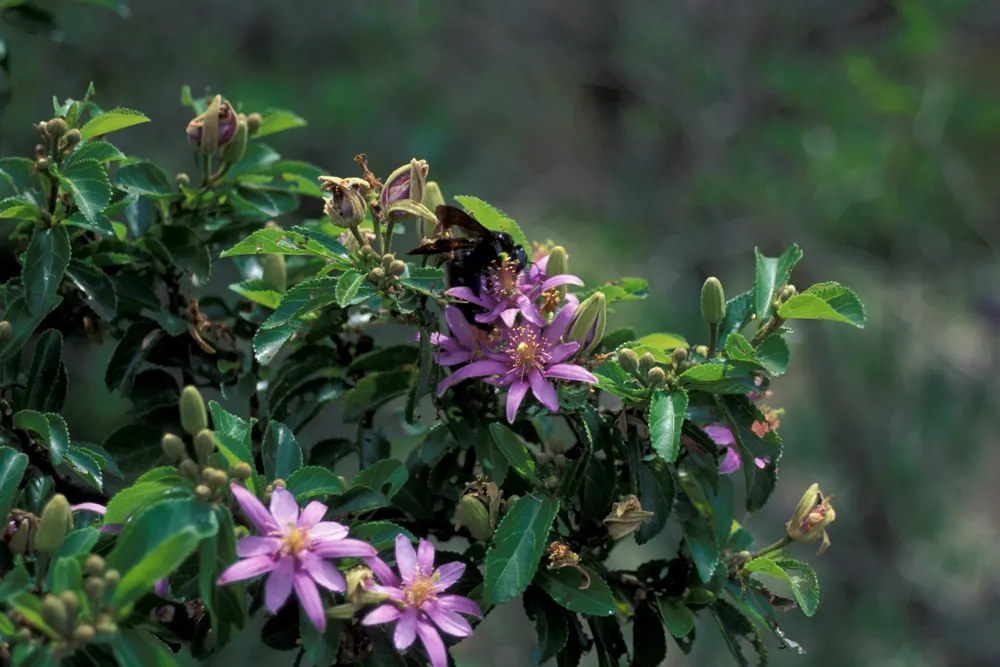
Photo: Forest & Kim Starr, CC BY 3.0 (via Wikimedia Commons)
Cross-berry
Grewia occidentalis
Also known as Cross-berry raisin, Four-corner, Kruisbessie (Afrikaans)
Key benefits
✦Traditional uses
✦Long before it was tended in gardens, the cross-berry grew wild across the bushveld and coastal thickets of southern Africa, where its soft, wine-colored fruit was gathered by hand straight from the branch. Rural households across the region have traditionally crushed the ripe berries into a refreshing drink or simmered them down into jelly, a practice passed from grandmother to grandchild long before it was ever written down. The plant's tough, pliable stems found a second life in traditional craft as well, twisted into cattle whips and woven into fencing, so a cross-berry thicket was valued as much for its wood as for its fruit. Its common name comes from the fruit itself, which splits to reveal a small cross at its center, a detail early foragers must have noticed and never forgotten.
How to grow & use it
✦The full apothecary for Cross-berry
Traditional remedies and step-by-step preparations, a complete growing guide, and how to harvest, dry, and store it, all unlocked with HerbLens Unlimited.
- ✦Remedies & preparations
- ✦ Growing guide
- ✦Harvest & storage
From under $6 a month. Free plant identifications always included.
- ✦Rooibos
- ✦Hibiscus
- ✦Lemon verbena
- ✦Phalsa (Grewia asiatica)
- ✦Rosehips
“For a taste of the wild bushveld, tart and sun-ripened, straight off a wandering branch.”
Slice a ripe cross-berry in half and you will find it divided into four neat lobes radiating from the center, like a tiny cross pressed into the fruit. That distinctive shape, rare among wild berries, is exactly how the plant earned its common name.
Ripe fruit is widely eaten and not known to be toxic, but correct identification matters, and unripe fruit or other plant parts should be avoided.