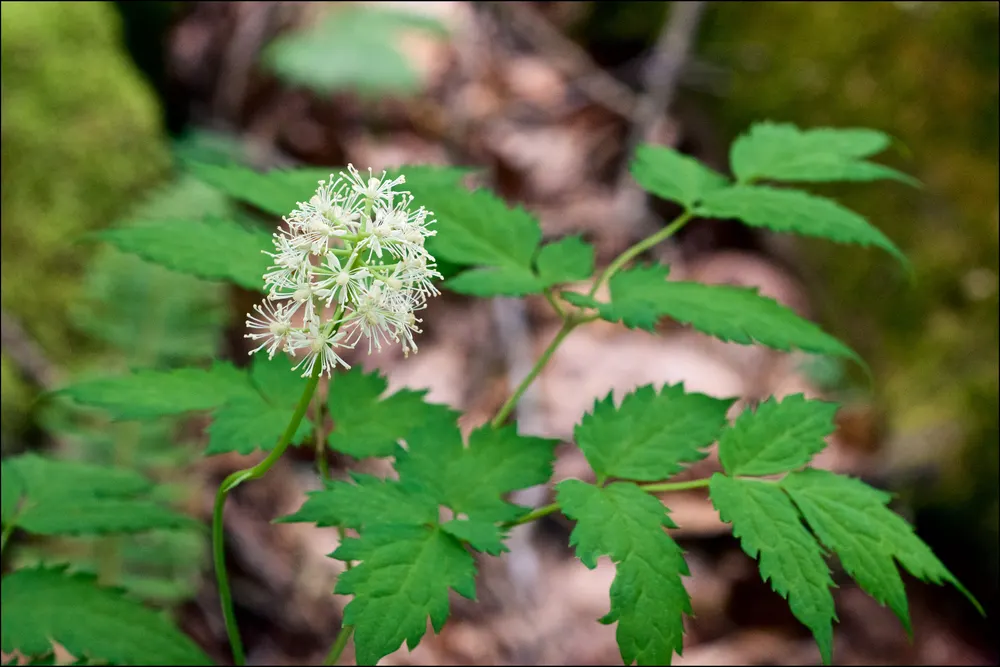
Photo: Eric Hunt, CC BY-SA 4.0 (via Wikimedia Commons)
White Baneberry
Actaea pachypoda
Also known as Doll's Eyes, White Cohosh, Necklace Weed, Coralberry
Traditional uses
✦White baneberry is better known in folk memory as a plant to walk carefully around than one to gather. Some Native American communities are recorded as having used small, carefully measured amounts of the root in external or ceremonial preparations, but this knowledge was specialized, closely guarded, and never treated as a household remedy. For most of its history, this plant's real value to people has been as a woodland marker, a strikingly beautiful signal that rich, undisturbed forest is nearby, and a lesson passed down about respecting what looks tempting but is not meant for the kitchen or the medicine cabinet.
How to grow & use it
✦The full apothecary for White Baneberry
Traditional remedies and step-by-step preparations, a complete growing guide, and how to harvest, dry, and store it, all unlocked with HerbLens Unlimited.
- ✦Remedies & preparations
- ✦ Growing guide
- ✦Harvest & storage
From under $6 a month. Free plant identifications always included.
- ✦Wild ginger
- ✦Ferns
- ✦Trillium
“A woodland beauty best admired from the path, never the pot.”
The plant's white berries, each tipped with a single dark dot, so closely resemble tiny china doll eyes that early American settlers named it exactly that, and the unsettling resemblance was meant as a memorable warning to keep children and foragers away.
White baneberry is genuinely poisonous and should never be ingested. Every part of the plant contains cardiogenic toxins, concentrated most heavily in the eye catching white and red berries, and eating even a small handful can cause a rapid, dangerous rise in heart rate, dizziness, burning in the mouth and throat, severe gastrointestinal distress, and in serious cases cardiac arrest. Children are especially at risk because the berries are colorful and visually tempting. There is no traditional preparation of this plant that is considered safe for home use, and it should not be confused with black cohosh (Actaea racemosa), a related but different plant with its own separate safety profile. If you suspect any exposure or ingestion, contact Poison Control or emergency services immediately rather than attempting any home remedy, and always consult a qualified medical professional or toxicologist for guidance.