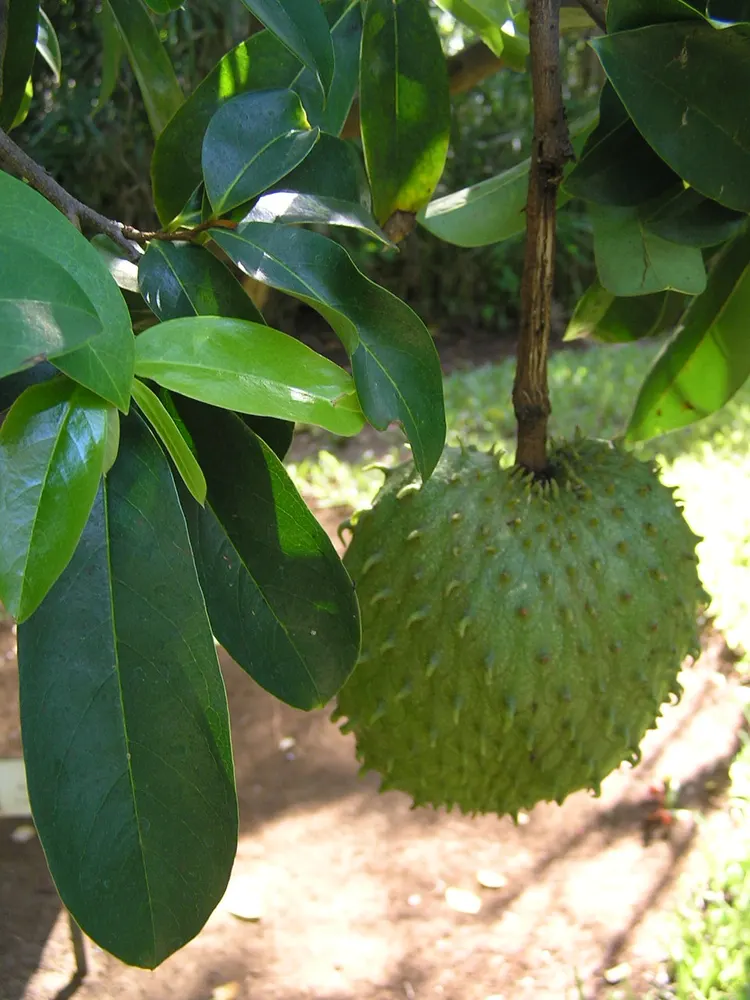
Photo: Damien Boilley from suburbs of Paris, France, CC BY 2.0 (via Wikimedia Commons)
Soursop
Annona muricata
Also known as Graviola, Guanabana, Guyabano, Corossol, Custard Apple (informally, though this name is shared with relatives)
Key benefits
✦Traditional uses
✦Soursop has been treasured across the tropics for centuries, its spiny green fruit prized for a pulp that tastes like a blend of pineapple, banana, and strawberry. In folk traditions from the Caribbean to Southeast Asia, nearly every part of the tree, the leaves, bark, roots, and seeds, found its way into home remedies for everything from fevers to aches to digestive upset. The fruit itself became a beloved staple, blended into juices, ice creams, and sweets throughout Latin America, the Philippines, and West Africa. In more recent decades, soursop leaf and extract have been widely marketed for serious health claims, which has drawn scientific attention, and that attention has raised real concerns rather than confirming the folklore.
How to grow & use it
✦The full apothecary for Soursop
Traditional remedies and step-by-step preparations, a complete growing guide, and how to harvest, dry, and store it, all unlocked with HerbLens Unlimited.
- ✦Remedies & preparations
- ✦ Growing guide
- ✦Harvest & storage
From under $6 a month. Free plant identifications always included.
- ✦Lime
- ✦Fresh ginger
- ✦Mint
- ✦Cherimoya
- ✦Pawpaw (Asimina triloba)
“A taste of the tropics for the table, not a remedy for the medicine cabinet.”
Soursop belongs to the same family as cherimoya and the North American pawpaw, and its enormous, spiny green fruit, sometimes weighing several pounds, grows directly off the trunk and thick branches rather than hanging from slender twigs like most tree fruit.
Soursop's leaves, seeds, bark, and roots contain annonacin, which studies have linked to atypical parkinsonism and other neurological harm with regular use in teas or extracts, so these parts should not be used as home remedies. The ripe fruit itself is widely and safely eaten in ordinary amounts, but the seeds are toxic if crushed or chewed and should never be eaten.