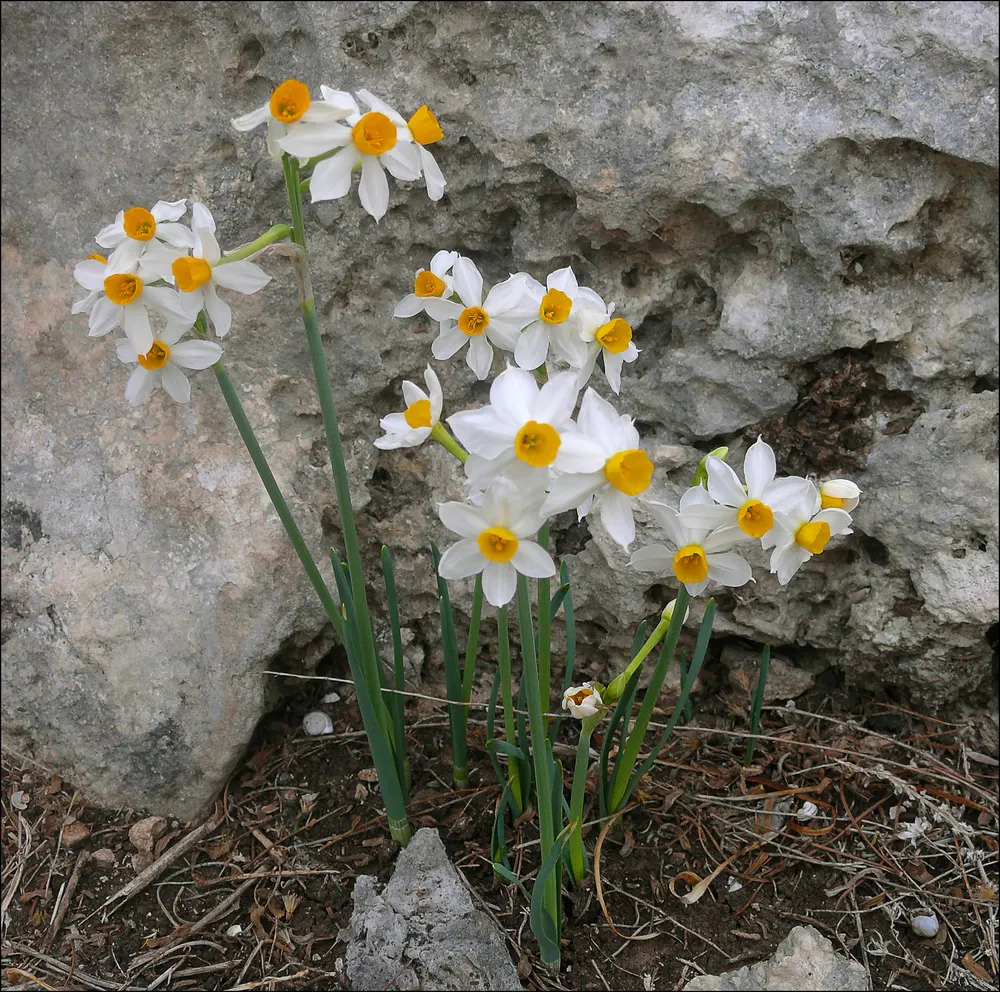
Photo: Zachi Evenor, CC BY 2.0 (via Wikimedia Commons)
Paperwhite
Narcissus tazetta
Also known as Paperwhite Narcissus, Bunch-flowered Daffodil, Chinese Sacred Lily, Shui Xian (Water Fairy Flower)
Key benefits
✦Traditional uses
✦Paperwhites have been grown for their heady, honeyed fragrance since antiquity, when Mediterranean and Middle Eastern gardeners prized narcissus flowers for perfumery and for scenting homes through the cold months. In China, bulbs of this same species are traditionally forced into bloom for Lunar New Year, where the flower is known as the Water Fairy and set on the table as a symbol of good fortune and prosperity for the coming year. Across many cultures the sight of paperwhites opening indoors in the dead of winter has long been treated as a small, welcome sign that spring is still on its way. Unlike many flowering herbs in this atlas, paperwhites were valued for beauty and scent rather than for the medicine chest, and that distinction matters, since the plant is not safe to take internally.
How to grow & use it
✦The full apothecary for Paperwhite
Traditional remedies and step-by-step preparations, a complete growing guide, and how to harvest, dry, and store it, all unlocked with HerbLens Unlimited.
- ✦Remedies & preparations
- ✦ Growing guide
- ✦Harvest & storage
From under $6 a month. Free plant identifications always included.
- ✦Hyacinth
- ✦Grape hyacinth
- ✦Amaryllis
- ✦Narcissus jonquilla (jonquil)
- ✦Narcissus poeticus (poet's daffodil)
“You want the scent of spring pushing through the shortest, darkest days of the year.”
Paperwhite bulbs closely resemble small onions or shallots, and every year poison control centers report cases of people mistaking them for a kitchen vegetable, sometimes with serious results, which is exactly why gardeners are urged to label their bulb bins clearly.
Narcissus tazetta is toxic and should never be eaten. All parts of the plant, especially the bulb, contain lycorine and needle-like calcium oxalate crystals that cause nausea, vomiting, diarrhea, and abdominal pain if ingested, with larger amounts capable of causing more serious illness. Paperwhite bulbs are a well-documented cause of accidental poisoning because they look so much like onions or shallots, so they should be stored and labeled well away from food bulbs and kitchen spaces. Handling the stems and sap can also irritate skin, a reaction florists have long called "daffodil itch." The plant is likewise toxic to cats, dogs, and other pets, and bulbs should be kept out of reach of children. This entry is included for its ornamental and cultural history only; it has no safe traditional preparation for internal use. If ingestion or a strong skin reaction occurs, contact a poison control center or a qualified medical professional right away.