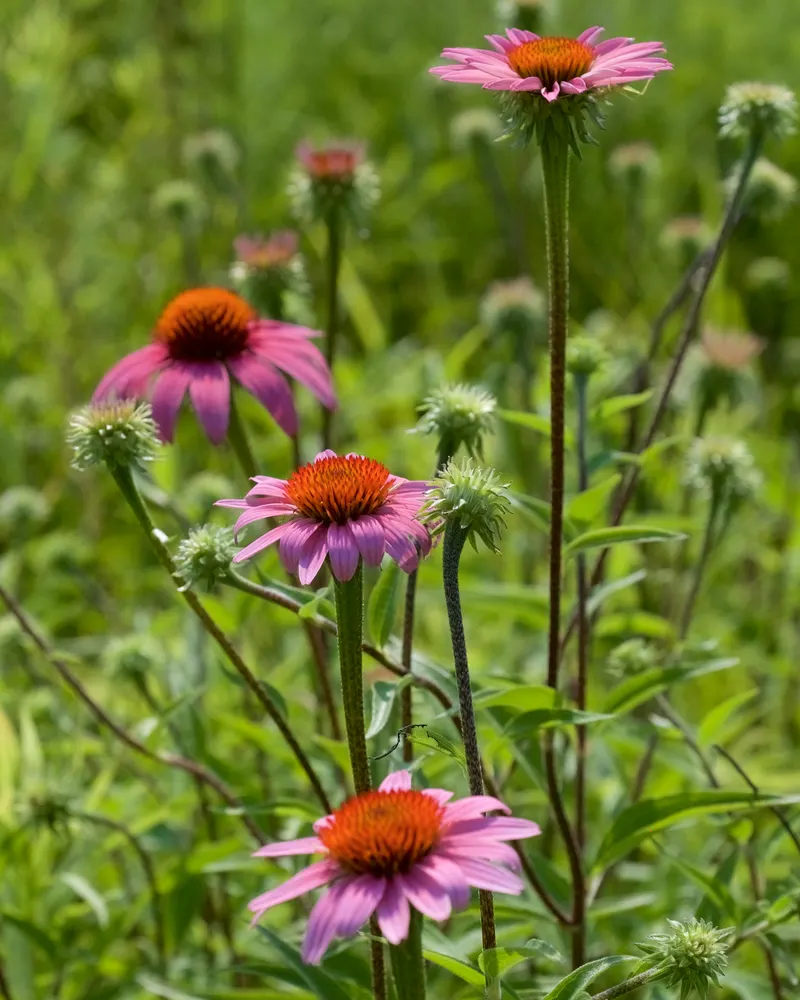
Photo: Eric Hunt, CC BY-SA 4.0 (via Wikimedia Commons)
Echinacea
Echinacea purpurea
Also known as Purple Coneflower
Key benefits
✦Traditional uses
✦Echinacea was used by more than twenty Native American nations for infections, wounds, and immune support long before it became one of the most studied herbs in Western herbalism. Hundreds of studies have looked at its immune-modulating properties, with the strongest evidence around easing the duration and severity of common upper respiratory infections. Its blend of alkamides, polysaccharides, and caffeic acid derivatives is thought to nudge the body's own white blood cells into action.
How to grow & use it
✦The full apothecary for Echinacea
Traditional remedies and step-by-step preparations, a complete growing guide, and how to harvest, dry, and store it, all unlocked with HerbLens Unlimited.
- ✦Remedies & preparations
- ✦ Growing guide
- ✦Harvest & storage
From under $6 a month. Free plant identifications always included.
- ✦Elderberry
- ✦Andrographis
- ✦Astragalus
- ✦Elderberry
- ✦Andrographis
“When you feel a cold coming on and want to meet it early.”
The Lakota people called echinacea the elk root, because they noticed elk seeking it out when they were injured or ill.
Avoid with autoimmune conditions, and use in short courses of about 10 days followed by a break. Avoid if allergic to ragweed, daisies, or marigolds (the Asteraceae family).