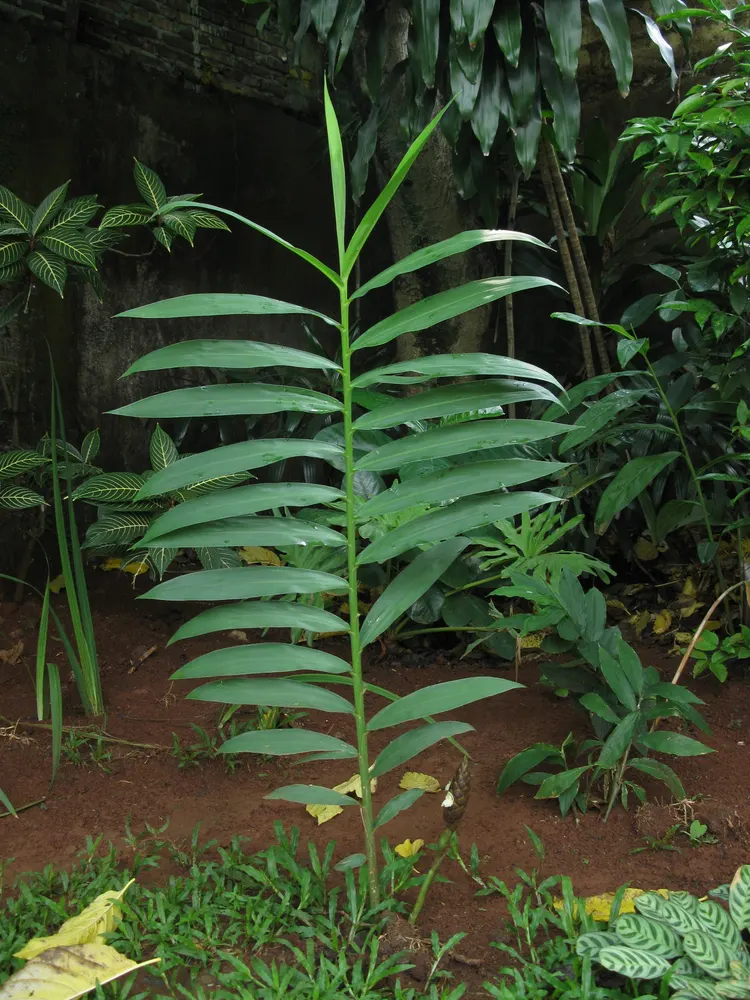
Photo: Benoit Blanchard, CC BY-SA 3.0 (via Wikimedia Commons)
Cassumunar Ginger (Plai)
Zingiber montanum
Also known as Plai, Bengal Ginger, Wild Cassumunar Ginger, Phlai
Key benefits
✦Traditional uses
✦Cassumunar ginger, known throughout Thailand as plai, has been a cornerstone of Southeast Asian folk medicine for generations, most famously as the fragrant, warming oil used in traditional Thai massage. Healers have long pounded the fresh golden rhizome and bundled it into hot herbal compresses called luk pra kob, pressed against aching backs and tired legs after a hard day's work. The root has also been chewed or taken as a simple tea to ease an occasional cough or settle a restless stomach, and rubbed on the skin as a folk remedy for insect bites and minor irritation. Over time it earned a place alongside its cousin, common ginger, as one of the region's most trusted household roots.
How to grow & use it
✦The full apothecary for Cassumunar Ginger (Plai)
Traditional remedies and step-by-step preparations, a complete growing guide, and how to harvest, dry, and store it, all unlocked with HerbLens Unlimited.
- ✦Remedies & preparations
- ✦ Growing guide
- ✦Harvest & storage
From under $6 a month. Free plant identifications always included.
- ✦Turmeric
- ✦Lemongrass
- ✦Kaffir Lime
- ✦Common Ginger (Zingiber officinale)
- ✦Galangal
“When muscles ache and the evening calls for warmth, plai's golden root has soothed Southeast Asian bodies for generations.”
Slice into a plai rhizome and you will find flesh ranging from deep golden orange to soft violet, a striking difference from the pale flesh of the common ginger found in most kitchens.
Cassumunar ginger is generally safe in traditional culinary or topical amounts, but its essential oil should not be taken internally and can irritate skin if applied undiluted. It may interact with blood-thinning medication, and medicinal-strength use is not advised during pregnancy or breastfeeding.