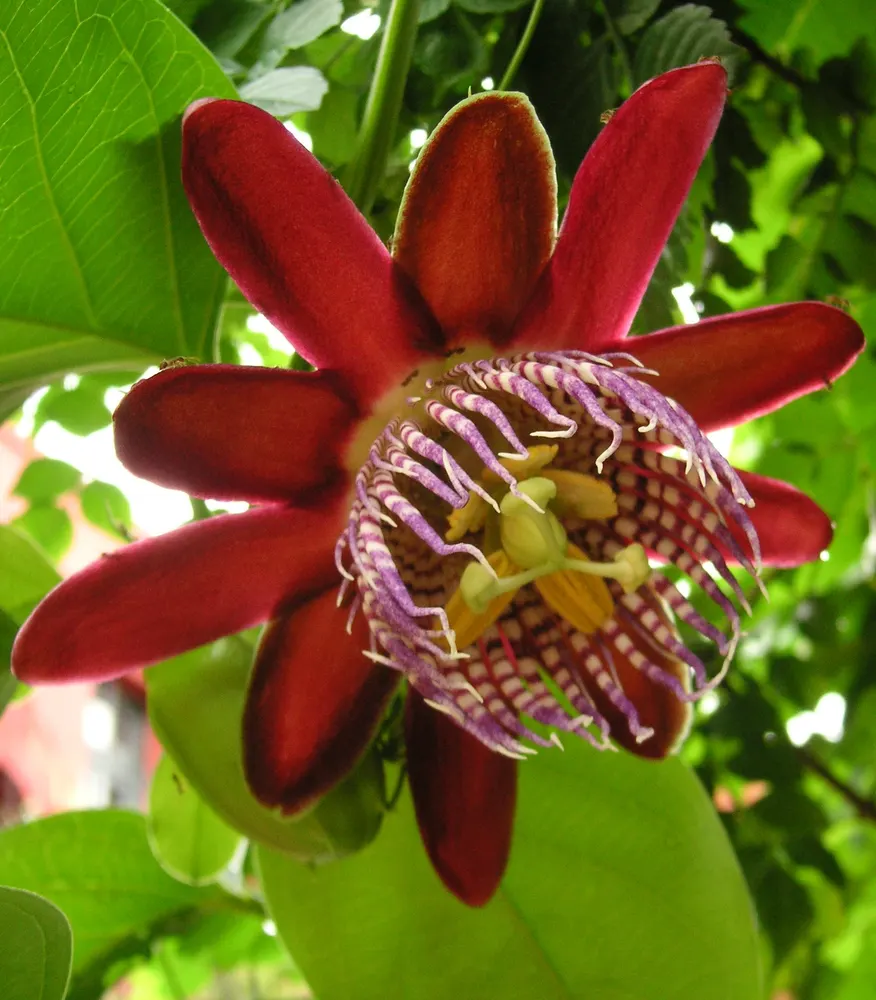
Photo: Beatrice Murch from Buenos Aires, Argentina, CC BY-SA 2.0 (via Wikimedia Commons)
Winged Passion Flower
Passiflora alata
Also known as Fragrant Granadilla, Maracujá-doce, Sweet Granadilla, Winged-stem Passionflower
Key benefits
✦Traditional uses
✦Long before it climbed garden trellises around the world, Passiflora alata grew wild along the forest margins of Brazil, where its leaves and flowers were steeped into calming teas within local folk medicine. Its cousin Passiflora incarnata is the passionflower best known in Western herbalism, but in South America it was alata's own broad, winged stems and heavy, perfumed blossoms that earned it a place in the household remedy chest, used quietly at the end of the day to help settle a restless mind. The vine's other gift, its plump, fragrant fruit, has been gathered and eaten fresh for generations, prized as much for its sweetness as for the flowers above it. Sixteenth century Spanish missionaries, struck by the intricate architecture of the bloom, read the story of the crucifixion in its structure and gave the whole genus the name that endures today: the passion flower.
How to grow & use it
✦The full apothecary for Winged Passion Flower
Traditional remedies and step-by-step preparations, a complete growing guide, and how to harvest, dry, and store it, all unlocked with HerbLens Unlimited.
- ✦Remedies & preparations
- ✦ Growing guide
- ✦Harvest & storage
From under $6 a month. Free plant identifications always included.
- ✦Chamomile
- ✦Lemon Balm
- ✦Lavender
- ✦Passiflora incarnata (maypop)
“For an evening that asks to be slowed down, one fragrant cup at a time.”
The species name alata means winged in Latin, a nod to the four distinct ridges that run down the length of its stems, a feature that sets it apart from its more famous relative, Passiflora incarnata.
Passionflower can cause drowsiness and add to the effect of sedatives or sleep medications. It's traditionally avoided in pregnancy for a possible uterine-stimulating effect.