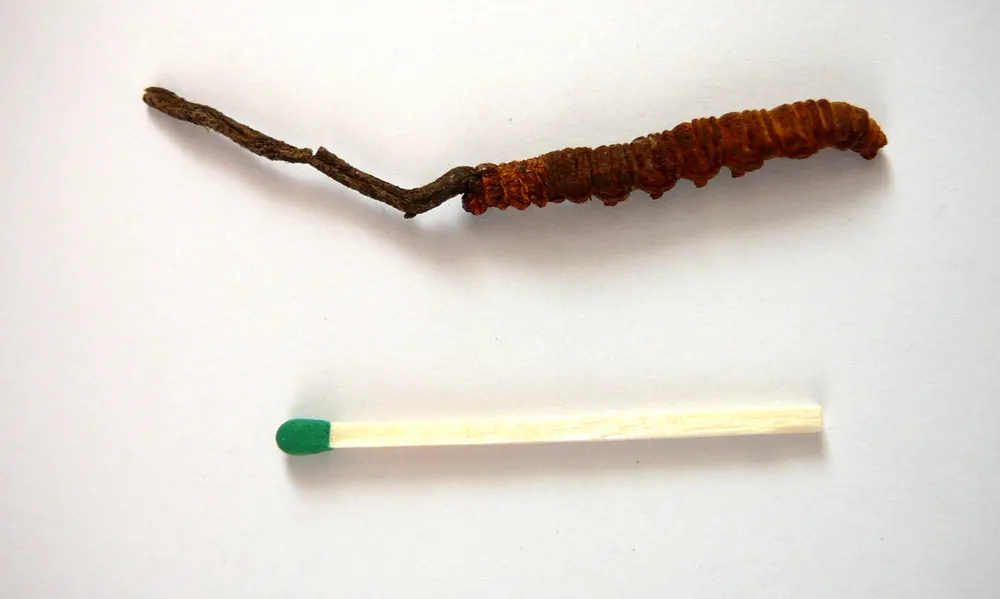
Photo: Nicolas Merky, CC BY-SA 3.0 de (via Wikimedia Commons)
Caterpillar Fungus
Ophiocordyceps sinensis
Also known as Cordyceps, Yartsa Gunbu, Dong Chong Xia Cao, Himalayan Gold, Winter Worm Summer Grass
Key benefits
✦Traditional uses
✦In Tibetan and Chinese medicine, this strange half-animal, half-fungus growth has been treasured for centuries as one of the great restorative tonics, gathered by hand from remote high-altitude meadows and reserved historically for emperors, elders, and the depleted. Tibetan herders called it yartsa gunbu, summer grass winter worm, and traditionally used it to support breath, stamina, and recovery after long illness or hard physical labor at extreme altitude. Chinese physicians folded it into tonic soups meant to nourish the lungs and kidneys, the two organ systems classical theory ties most closely to deep, lasting energy. Its rarity and its odd two-part life history, part caterpillar, part fungus, only deepened its reputation as something rare and precious rather than an everyday remedy.
How to grow & use it
✦The full apothecary for Caterpillar Fungus
Traditional remedies and step-by-step preparations, a complete growing guide, and how to harvest, dry, and store it, all unlocked with HerbLens Unlimited.
- ✦Remedies & preparations
- ✦ Growing guide
- ✦Harvest & storage
From under $6 a month. Free plant identifications always included.
- ✦Astragalus root
- ✦American ginseng
- ✦Goji berry
- ✦Cordyceps militaris (cultivated)
- ✦Reishi mushroom
“For the quiet, sustained endurance the high Himalaya seems to distill into something small, dark, and strange.”
For centuries, Tibetan herders believed the odd finger-like growth was literally a caterpillar transforming into a blade of grass each spring, which is exactly what its name yartsa gunbu, summer grass winter worm, describes. Modern mycology later revealed the truth: a fungus that infects a living moth caterpillar underground, slowly mummifies it, and then sends up a single fruiting stalk from its head. Today, wild specimens can sell for more than the price of gold by weight, making it one of the most valuable biological products on earth.
Wild caterpillar fungus can bioaccumulate arsenic and other heavy metals from alpine soil, so sourcing matters and it should not be taken daily long term. It may affect blood clotting and immune activity, so avoid it with blood thinners, immunosuppressants, autoimmune conditions, bleeding disorders, or before surgery, and skip it during pregnancy or breastfeeding. The wild market is heavily counterfeited, so buy from a reputable source.