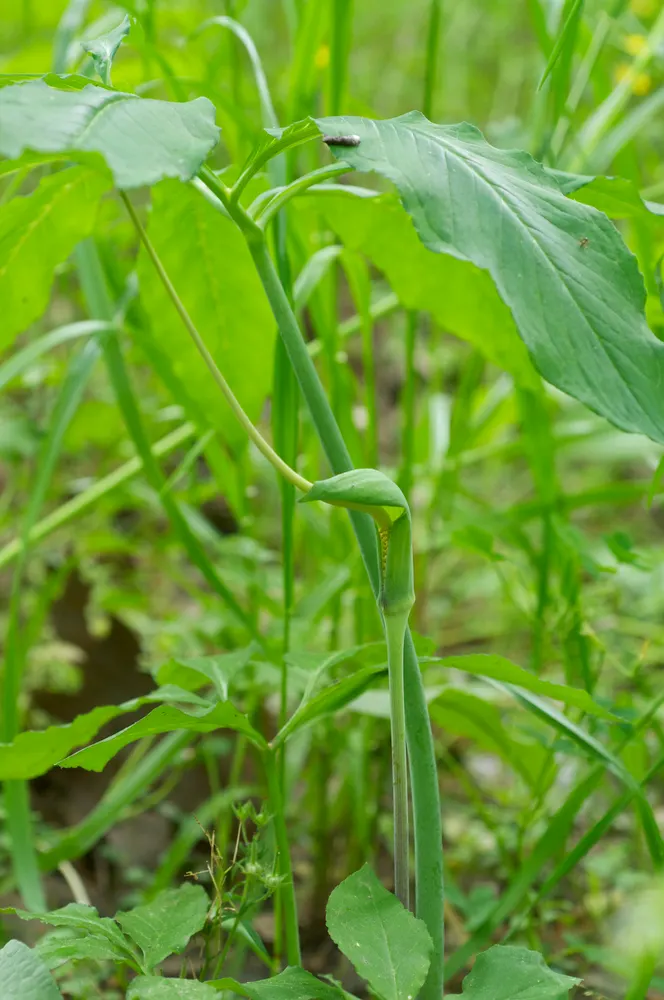
Photo: Eric Hunt, CC BY-SA 4.0 (via Wikimedia Commons)
Green Dragon
Arisaema dracontium
Also known as Dragonroot, Green Dragon Arum, Dragon Arum
Key benefits
✦Traditional uses
✦Green Dragon is the shier, more elusive cousin of Jack-in-the-pulpit, tucked into the same rich bottomland woods but easy to miss until that odd, protruding spadix catches your eye. Some Native American nations dried and carefully processed the corm for use in respiratory complaints and as a counterirritant for rheumatism, but this was specialist knowledge, passed down and practiced with real caution. The raw plant was never eaten casually. Today Green Dragon is valued far more as a woodland garden treasure and a marker of healthy, undisturbed forest than as anything to prepare at home.
How to grow & use it
✦The full apothecary for Green Dragon
Traditional remedies and step-by-step preparations, a complete growing guide, and how to harvest, dry, and store it, all unlocked with HerbLens Unlimited.
- ✦Remedies & preparations
- ✦ Growing guide
- ✦Harvest & storage
From under $6 a month. Free plant identifications always included.
- ✦Jack-in-the-pulpit
- ✦Mayapple
- ✦Trillium
“For the quiet thrill of finding a dragon's tongue curled in the deep green hush of the forest floor.”
Unlike its relative Jack-in-the-pulpit, Green Dragon's spadix does not hide demurely inside its hooded spathe. Instead it juts far out beyond the opening like a slender tongue, which is exactly how the plant earned its dragon name.
Green Dragon contains needle-like calcium oxalate crystals throughout the plant, concentrated heavily in the fresh corm. Chewing or swallowing any raw part causes intense, immediate burning and swelling of the lips, tongue, mouth, and throat, and in more severe cases this swelling can interfere with breathing or swallowing. It is not a plant for home food or remedy use, even dried, and should be kept well away from children and pets who might be tempted by its unusual look. If any part of this plant is ingested, contact Poison Control or seek emergency medical care right away, and speak with a qualified healthcare professional or botanist before ever handling it beyond garden admiration.