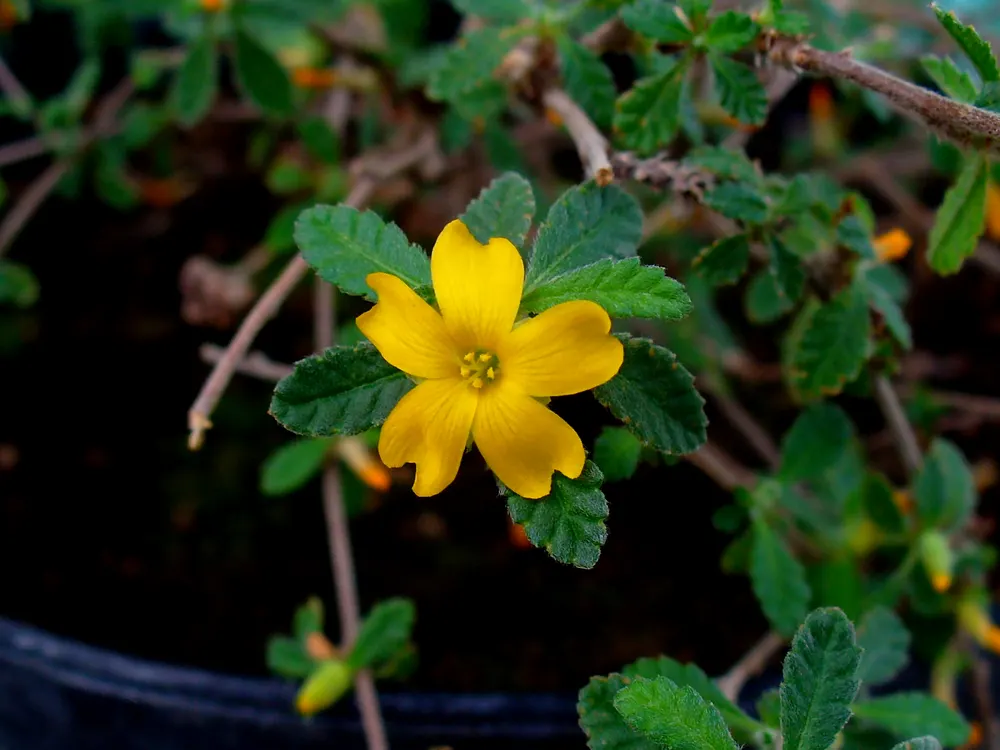
Photo: H. Zell, CC BY-SA 3.0 (via Wikimedia Commons)
Damiana
Turnera diffusa
Also known as Mexican Damiana, Turnera aphrodisiaca, Old Woman's Broom, Herba de la Pastora
Key benefits
✦Traditional uses
✦Damiana grows wild across the dry hillsides of Mexico and Central America, where it was gathered by Maya healers long before Spanish colonization and folded into remedies meant to lift the spirits and restore vigor. By the late 1800s it had crossed into American and European herbal medicine cabinets, sold as a tonic for waning energy and desire, and it quickly earned a reputation as one of the most talked-about aphrodisiac herbs in Western herbalism. Beyond that famous reputation, everyday folk use also leaned on damiana as a gentle bitter to settle the stomach after a heavy meal and as a calming cup for restless nerves. Its warm, slightly resinous fragrance, reminiscent of chamomile with a hint of fig, has kept it a fixture in herbal tea blends for well over a century.
How to grow & use it
✦The full apothecary for Damiana
Traditional remedies and step-by-step preparations, a complete growing guide, and how to harvest, dry, and store it, all unlocked with HerbLens Unlimited.
- ✦Remedies & preparations
- ✦ Growing guide
- ✦Harvest & storage
From under $6 a month. Free plant identifications always included.
- ✦Hibiscus
- ✦Cinnamon
- ✦Rose petals
- ✦Catuaba bark
- ✦Muira puama
“For the evenings you want a little old-world warmth and spark back in your cup.”
Damiana's old reputation ran so deep in Baja California that a local liqueur made from its leaves, bottled since the 1930s in a curvy bottle said to represent an ancient fertility goddess, is claimed by some old-timers as a forgotten ancestor of the margarita.
Damiana is generally well tolerated as an occasional tea. It's traditionally avoided in pregnancy for a reputed womb-stimulating effect, and it may affect blood sugar, so those on diabetes medication should be watchful.