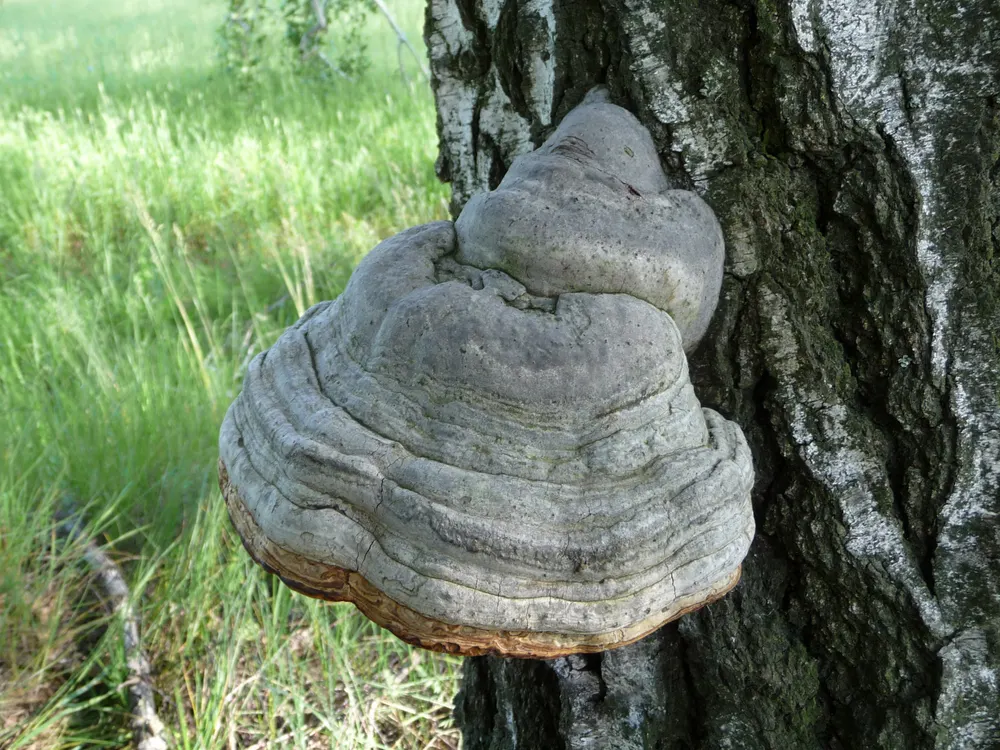
Photo: George Chernilevsky, Public domain (via Wikimedia Commons)
Tinder Fungus
Fomes fomentarius
Also known as Hoof Fungus, Horse's Hoof Fungus, Amadou, Tinder Conk, Tinder Polypore
Key benefits
✦Traditional uses
✦Long before matches or gauze bandages existed, Fomes fomentarius was doing the work of both. Foragers across Europe, Asia, and North America learned to pound its soft inner flesh into a supple, felt-like material called amadou, prized for catching a spark and nursing it into flame, and for pressing against small wounds to help slow the bleeding. In parts of the Alps and the British Isles, dried pieces were also smoldered and held near sore joints in a practice much like moxibustion, an old comfort for aches on a cold, damp night. It traveled with hunters and healers alike, tucked into pouches as one of the most dependable tools the forest offered.
How to grow & use it
✦The full apothecary for Tinder Fungus
Traditional remedies and step-by-step preparations, a complete growing guide, and how to harvest, dry, and store it, all unlocked with HerbLens Unlimited.
- ✦Remedies & preparations
- ✦ Growing guide
- ✦Harvest & storage
From under $6 a month. Free plant identifications always included.
- ✦Yarrow
- ✦Plantain
- ✦Puffball
- ✦Puffball (Lycoperdon species)
- ✦Chaga (Inonotus obliquus)
“When the old forest offers its quietest gift, a slow, steady ember and a soft wrap for a small wound.”
When the 5,300 year old iceman known as Otzi was discovered in the Alps in 1991, he was carrying pieces of Fomes fomentarius among his gear, a find that pushed our knowledge of this fungus as a fire-and-first-aid companion all the way back to the Stone Age.
Fomes fomentarius is not toxic but is not a food either, its flesh is tough and essentially indigestible. Its historical uses as tinder or a wound dressing carry burn or infection risk and should be treated as folk history, not a substitute for medical care.