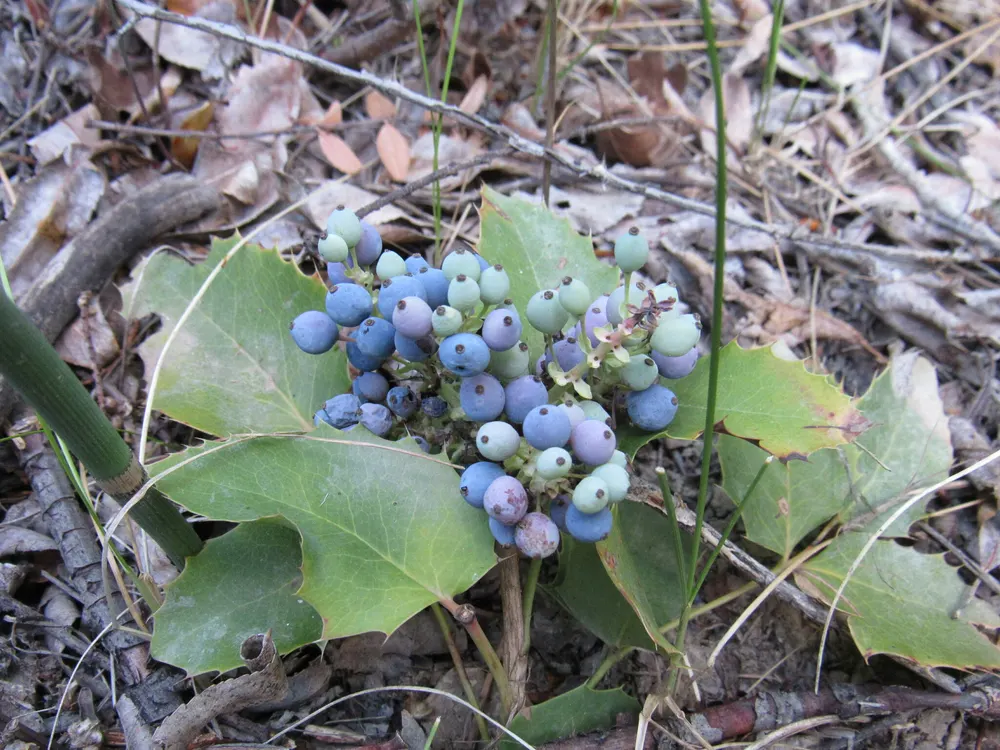
Photo: Anders Hastings https://www.inaturalist.org/people/andershastings, CC BY 4.0 (via Wikimedia Commons)
Creeping Oregon Grape
Mahonia repens
Also known as Creeping Barberry, Creeping Mahonia, Trailing Oregon Grape, Dwarf Oregon Grape
Key benefits
✦Traditional uses
✦Long before it had a Latin name, creeping Oregon grape was known to the peoples of the intermountain West as a bitter, golden-rooted helper for a sluggish stomach and a tired liver. Its root bark, startlingly yellow when cut, was simmered into decoctions for digestive complaints and used as a wash for skin troubles, much as its taller relative Mahonia aquifolium was used along the Pacific coast. Because it spreads low and thick across dry, rocky ground where little else thrives, it was also a plant people simply learned to recognize and reach for close to home. Later herbalists folded it into the same bitter-tonic tradition as barberry and goldenseal, prized for the same golden alkaloid at its core.
How to grow & use it
✦The full apothecary for Creeping Oregon Grape
Traditional remedies and step-by-step preparations, a complete growing guide, and how to harvest, dry, and store it, all unlocked with HerbLens Unlimited.
- ✦Remedies & preparations
- ✦ Growing guide
- ✦Harvest & storage
From under $6 a month. Free plant identifications always included.
- ✦Dandelion root
- ✦Ginger
- ✦Milk thistle
- ✦Oregon grape (Mahonia aquifolium)
- ✦Barberry (Berberis vulgaris)
“For the quiet, golden-rooted bitter of dry western hillsides.”
Slice into a creeping Oregon grape root and you will find wood so vividly yellow it looks dyed. Native peoples and early settlers used it exactly that way, boiling the roots and bark to color wool, baskets, and cloth a warm golden hue.
Creeping Oregon grape contains berberine and should be avoided in pregnancy and breastfeeding and never given to infants, since it has been linked to a serious newborn jaundice-like condition. It can also interact with blood thinners, blood sugar or blood pressure medications, and liver-processed drugs, so use only small, traditional amounts.