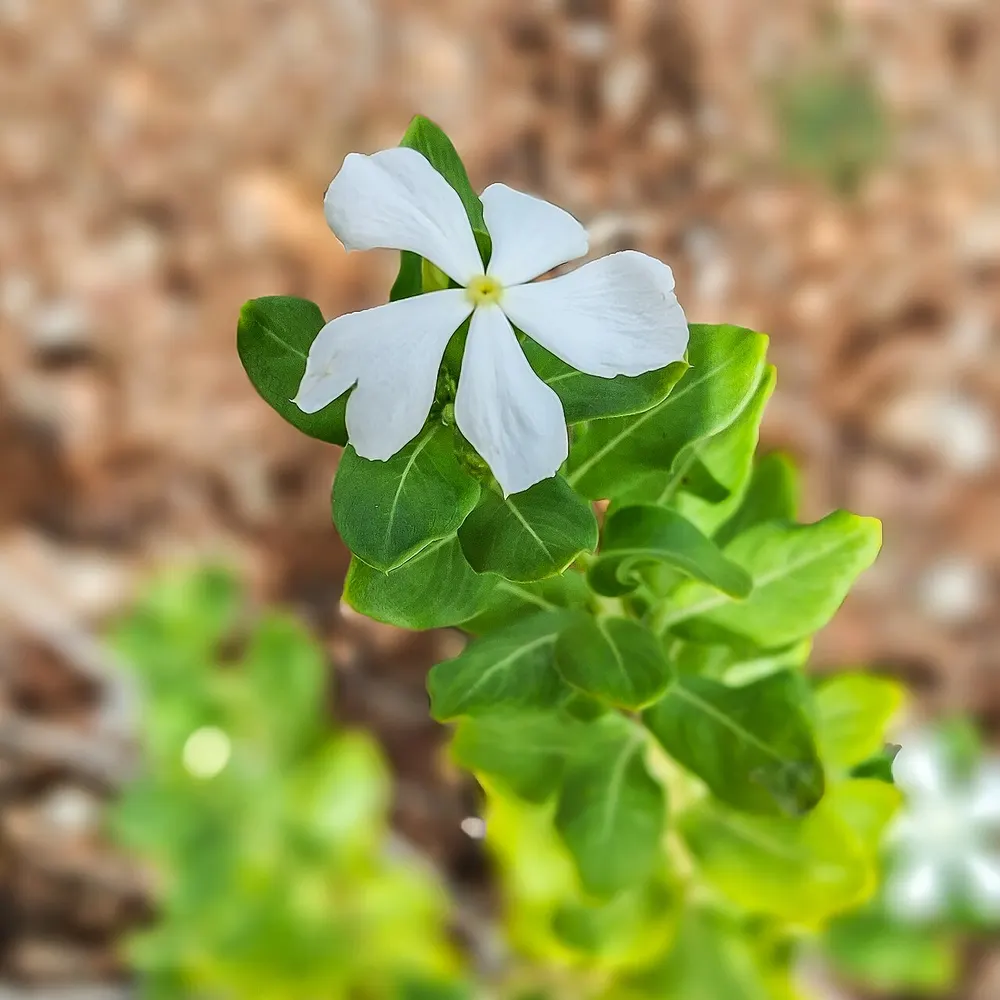
Photo: Tournasol7, CC BY 4.0 (via Wikimedia Commons)
Leathery-leaved Periwinkle
Catharanthus coriaceus
Also known as Leathery Periwinkle, Madagascar Leathery Periwinkle
Traditional uses
✦Catharanthus coriaceus is a little-known, narrowly distributed shrub found only in the dry scrub of Madagascar, a homeland it shares with its far more famous relative, the Madagascar periwinkle. That relative changed modern medicine when researchers isolated powerful alkaloids from its leaves, compounds now used in closely supervised cancer chemotherapy. Because Catharanthus coriaceus sits in that same genus, it is presumed to carry similar potent, cytotoxic alkaloids, though this particular species has not been well studied. There is no tradition of folk or home use for it, and it has never been part of any established herbal practice. It is best appreciated today as a rare botanical curiosity and a reminder of how much unexplored chemistry still lives in Madagascar's plants.
How to grow & use it
✦The full apothecary for Leathery-leaved Periwinkle
Traditional remedies and step-by-step preparations, a complete growing guide, and how to harvest, dry, and store it, all unlocked with HerbLens Unlimited.
- ✦Remedies & preparations
- ✦ Growing guide
- ✦Harvest & storage
From under $6 a month. Free plant identifications always included.
“You want to admire a rare Madagascar cousin of the periwinkle, not to steep or swallow.”
Catharanthus coriaceus belongs to the very same small genus that gave the world vincristine and vinblastine, two of the most important cancer chemotherapy drugs ever derived from a plant, first isolated from its famous relative Catharanthus roseus in the 1950s.
Catharanthus coriaceus should not be eaten, brewed, or otherwise ingested in any home remedy. It belongs to the periwinkle genus Catharanthus, whose best-known member, Catharanthus roseus, contains potent vinca alkaloids that are toxic in unregulated amounts and are used medically only as tightly controlled, prescription chemotherapy agents under close clinical supervision, never as a home tea or tincture. Because Catharanthus coriaceus has not been well studied, it should be assumed to carry similarly powerful and potentially dangerous alkaloids until proven otherwise. Ingestion may cause serious toxicity, and there is no established safe traditional dose for humans or animals. Keep this plant, if grown as an ornamental curiosity, well away from children, pets, and livestock. Do not attempt to self-prepare any part of it. If you are interested in the pharmacology of this genus, or have been exposed to plant material and are concerned, speak with a qualified healthcare provider, toxicologist, or poison control resource rather than experimenting on your own.