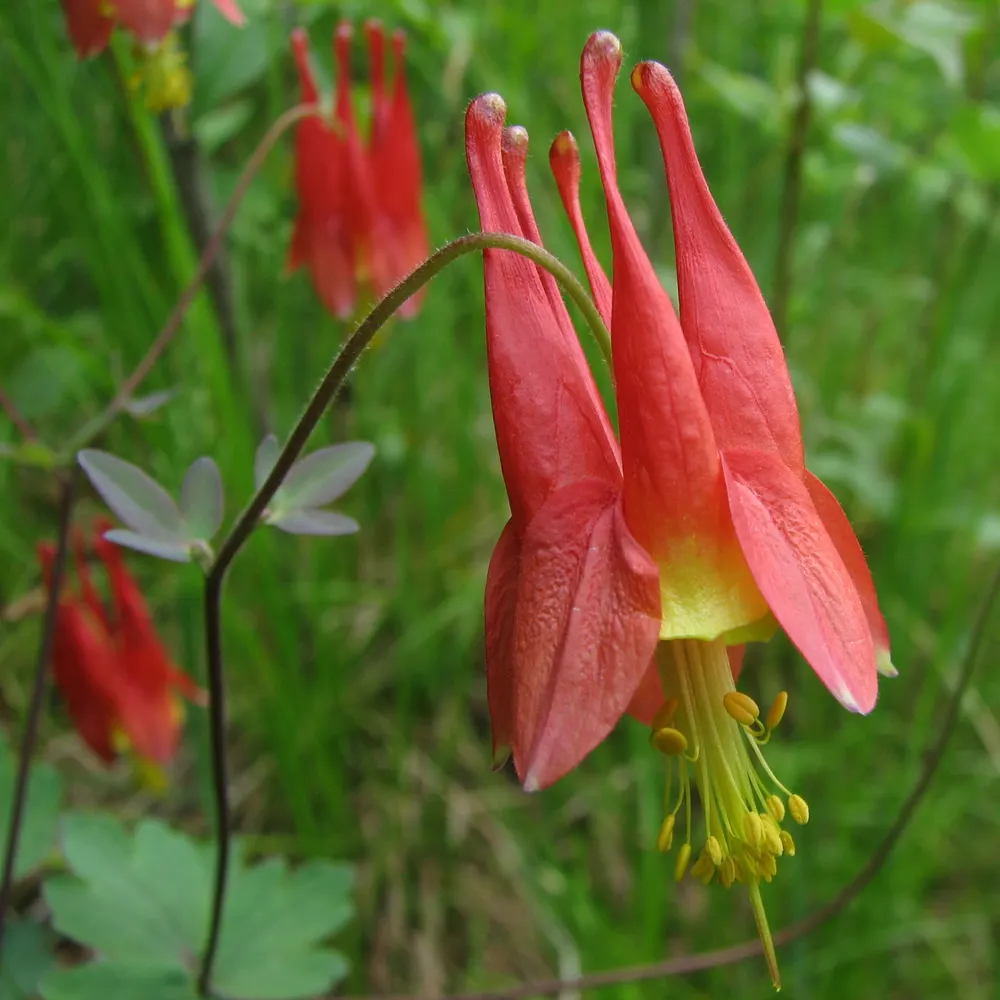
Photo: Ragesoss, CC BY-SA 3.0 (via Wikimedia Commons)
Wild Columbine
Aquilegia canadensis
Also known as Canadian Columbine, Eastern Red Columbine, Rock Bells, Meeting Houses, Jack-in-trousers
Key benefits
✦Traditional uses
✦Wild columbine has long been noticed more for its charm than its medicine chest. Several Native nations, including the Meskwaki and Iroquois, ground the seeds and rubbed them between the palms as a perfume, worn as a courting charm meant to draw a partner's attention. Some traditions also describe careful, limited external or ceremonial uses of the root, but this was never a widespread kitchen or tea herb the way echinacea or chamomile were. Today it holds its place mainly as a beloved dooryard and woodland flower, a plant grown for its hummingbirds and its history rather than for the medicine cabinet.
How to grow & use it
✦The full apothecary for Wild Columbine
Traditional remedies and step-by-step preparations, a complete growing guide, and how to harvest, dry, and store it, all unlocked with HerbLens Unlimited.
- ✦Remedies & preparations
- ✦ Growing guide
- ✦Harvest & storage
From under $6 a month. Free plant identifications always included.
- ✦Wild ginger
- ✦Foamflower
- ✦Solomon's seal
- ✦Western red columbine (Aquilegia formosa) for similar hummingbird gardening in western regions
“For the woodland corner you want humming with ruby-throated visitors from the first warm week of spring.”
The genus name Aquilegia comes from the Latin aquila, or eagle, because the five backward-curving spurs on each flower were thought to resemble eagle talons. Hummingbirds arriving from spring migration seek out those spurs first, since wild columbine is often one of the earliest nectar sources waiting for them in the woods.
Wild columbine is not safe to eat. The seeds and roots contain cyanogenic compounds that can release cyanide-related toxins and are toxic to humans, pets, and livestock, so keep children and grazing animals away from the seed pods and roots. If ingestion is suspected, contact poison control right away.