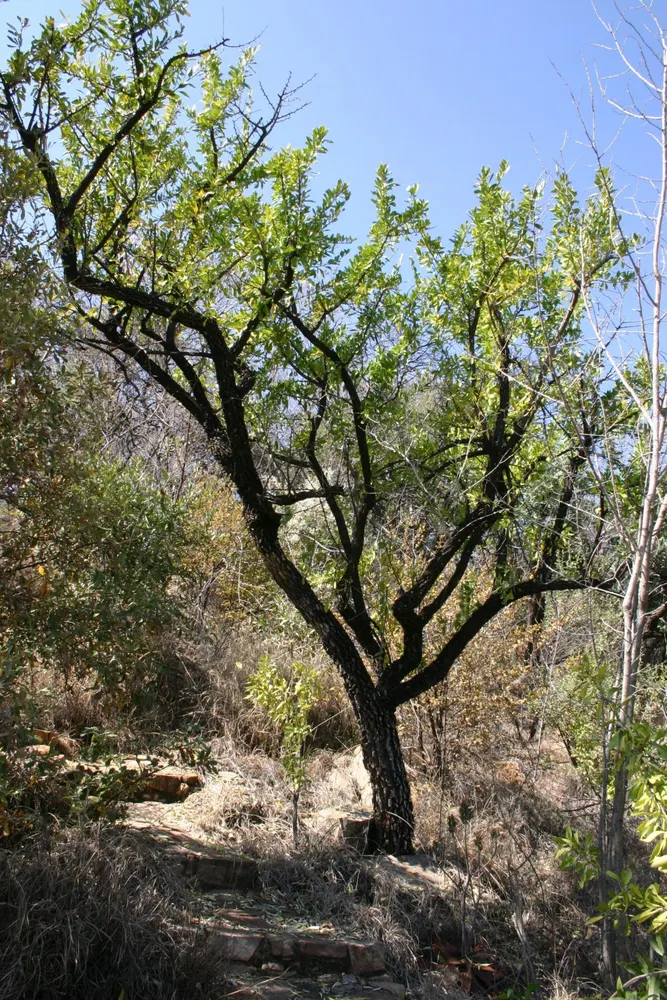
Photo: Rotational, Public domain (via Wikimedia Commons)
Common Spike-thorn
Maytenus heterophylla
Also known as Spike-thorn, Kraaldoring, Common Spike-thorn, Gymnosporia heterophylla
Key benefits
✦Traditional uses
✦Long before it had a Latin name, this thorny shrub stood sentry around homesteads and cattle kraals across Southern Africa, its interlocking spiny branches woven or planted close together to keep livestock in and predators out, a practice that earned it the Afrikaans name kraaldoring, or kraal-thorn. Ethnobotanists such as Watt and Breyer-Brandwijk, who cataloged the medicinal and poisonous plants of the region in the mid twentieth century, recorded that traditional healers among several Southern African peoples also turned to its bark and root for a range of remedies, treating it with the same respect given to other powerful, double-edged plants of the veld. That dual reputation, guardian hedge on one hand and closely watched medicine on the other, still shapes how the plant is regarded today. Modern phytochemistry has since found that its relatives in the Maytenus family harbor some of the most potent natural compounds ever isolated, a discovery that only deepened scientific interest in this quietly formidable genus.
How to grow & use it
✦The full apothecary for Common Spike-thorn
Traditional remedies and step-by-step preparations, a complete growing guide, and how to harvest, dry, and store it, all unlocked with HerbLens Unlimited.
- ✦Remedies & preparations
- ✦ Growing guide
- ✦Harvest & storage
From under $6 a month. Free plant identifications always included.
“For the gardener who wants a living, thorn-armored hedge that has guarded homesteads for generations.”
The name kraaldoring comes from the plant's old role as living fencing: farmers and herders would plant or pile its viciously spined branches around cattle kraals, and the barrier was tough enough to turn back both wandering stock and prowling predators without a single strand of wire.
The bark and root should never be eaten or brewed at home: a related species is the source of maytansine, an extremely potent cytotoxic compound used only in controlled cancer therapy, and no home dose is safe. The plant also has stiff, sharp spines that can cause puncture wounds, so handle it with gloves.