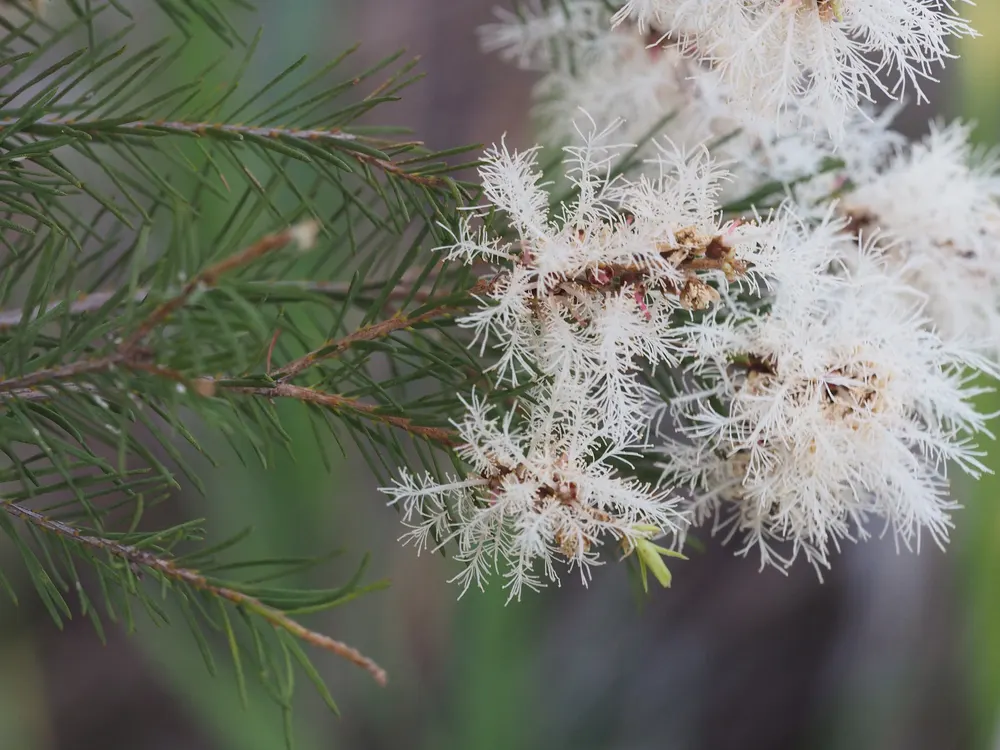
Photo: Geoff Derrin, CC BY-SA 4.0 (via Wikimedia Commons)
Tea Tree
Melaleuca alternifolia
Also known as Narrow-Leaved Paperbark, Ti-Tree, Snow-in-Summer
Key benefits
✦Traditional uses
✦Long before it reached apothecary shelves worldwide, tea tree grew wild in the boggy lowlands of northern New South Wales, where the Bundjalung people and other Aboriginal Australian nations crushed its narrow, fragrant leaves to inhale for coughs and congestion, and pressed the pulp onto the skin for cuts, insect bites, and irritation. Its now-familiar name is said to trace back to eighteenth century sailors, including members of Captain Cook's crew, who steeped the pungent leaves as a substitute tea during long voyages along the Australian coast. It was not until the 1920s, when an Australian chemist studied its oil's properties, that tea tree began its journey from a regional bush remedy to one of the most recognized aromatic plants in the world.
How to grow & use it
✦The full apothecary for Tea Tree
Traditional remedies and step-by-step preparations, a complete growing guide, and how to harvest, dry, and store it, all unlocked with HerbLens Unlimited.
- ✦Remedies & preparations
- ✦ Growing guide
- ✦Harvest & storage
From under $6 a month. Free plant identifications always included.
- ✦Lavender
- ✦Eucalyptus
- ✦Lemon Myrtle
- ✦Eucalyptus
- ✦Manuka
“For the sharp, clean scent of Australian bushland, and centuries of coastal wisdom about caring for the skin's surface.”
Tea tree earned its common name from eighteenth century sailors who brewed its spicy-smelling leaves into a makeshift tea during coastal voyages, giving the plant a name that has stuck ever since, even though it belongs to the myrtle family and shares no relation to true tea.
Tea tree oil is toxic if swallowed, even in small amounts, and has caused serious poisoning in children and pets; never take it internally. Always dilute it in a carrier oil before topical use since it can irritate skin and cause allergic contact dermatitis, and use caution or avoid it during pregnancy, breastfeeding, and in young children due to possible hormone-disrupting effects with repeated exposure.