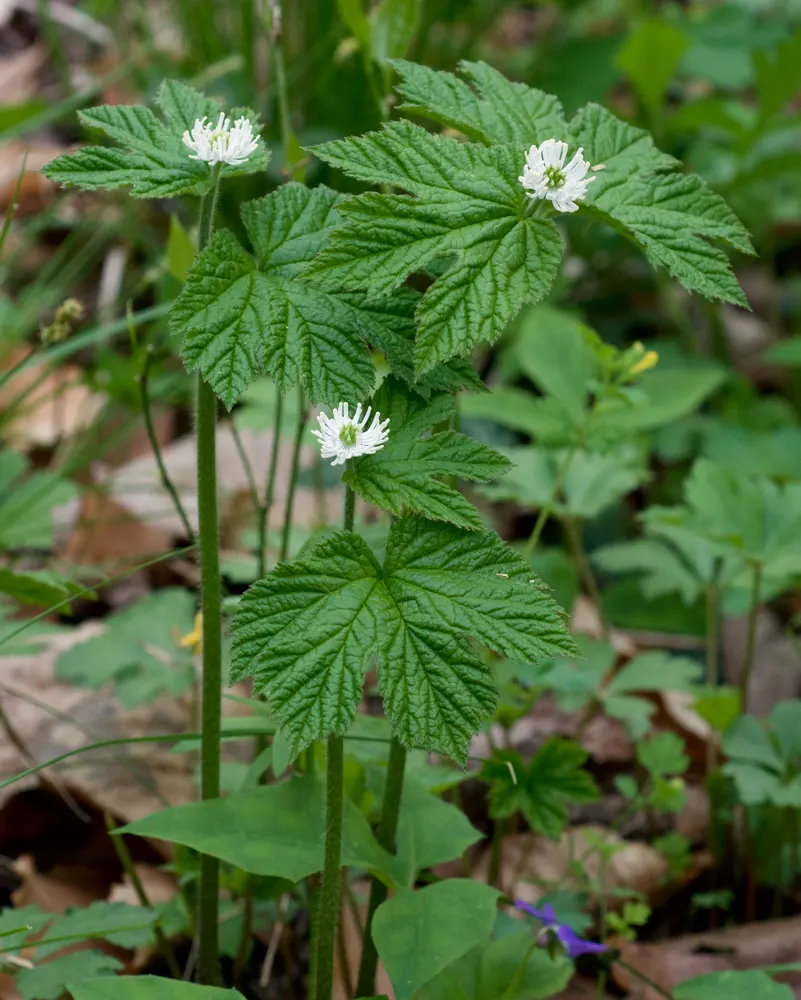
Photo: Eric Hunt, CC BY-SA 4.0 (via Wikimedia Commons)
Goldenseal
Hydrastis canadensis
Also known as Yellow Root, Orange Root, Indian Turmeric, Eye Root, Ground Raspberry
Key benefits
✦Traditional uses
✦Long before it reached apothecary shelves, goldenseal grew quietly in the leaf litter of Appalachian forests, tended in knowledge by the Cherokee, Iroquois, and other nations who dug its bright yellow root for digestive complaints, sore eyes, and skin ailments, and used it as a dye for baskets and cloth. When European settlers learned of it, the root became a cornerstone of nineteenth century Eclectic medicine, prized as a bitter tonic and a wash for irritated skin and mucous membranes. Its reputation grew so quickly, and its harvest became so intense, that goldenseal now stands as a cautionary tale in herbalism, a plant loved nearly out of existence in the wild.
How to grow & use it
✦The full apothecary for Goldenseal
Traditional remedies and step-by-step preparations, a complete growing guide, and how to harvest, dry, and store it, all unlocked with HerbLens Unlimited.
- ✦Remedies & preparations
- ✦ Growing guide
- ✦Harvest & storage
From under $6 a month. Free plant identifications always included.
- ✦Echinacea
- ✦Licorice Root
- ✦Myrrh
- ✦Oregon Grape Root
- ✦Barberry Root
“For the quiet, bitter gold at the heart of the old forest apothecary.”
Goldenseal became so sought after during the herbal medicine boom of the 1800s that today it is listed as at-risk by United Plant Savers, and most ethical growers now urge buyers to choose cultivated root rather than wild-dug, so the forests that first gave us this golden root can keep it.
Goldenseal is a potent short-term herb, not an everyday tea, and should be avoided during pregnancy, while breastfeeding, and by infants. It can raise blood pressure and interacts with many medications processed by the liver, so avoid long-term use and check with a doctor if you take other drugs. Choose sustainably cultivated root, since wild populations are overharvested.