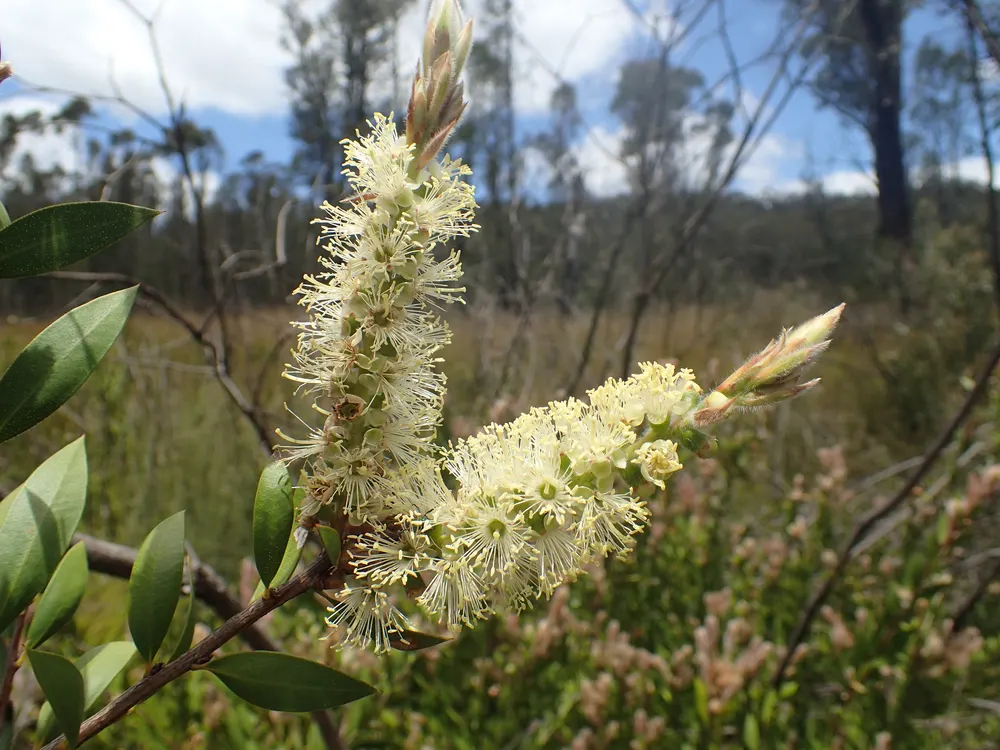
Photo: Geoff Derrin, CC BY-SA 4.0 (via Wikimedia Commons)
Lemon Bottlebrush
Callistemon pallidus
Also known as Lemon Bottlebrush, Showy Bottlebrush, Pale Bottlebrush, Melaleuca pallida
Key benefits
✦Traditional uses
✦Long before it became a garden favorite around the world, this bottlebrush grew wild along the creeks and stony hillsides of southeastern Australia, where its pale lemon flower spikes were a welcome sight to honeyeaters and to people alike. Aboriginal Australians in its native range have traditionally gathered the nectar-rich blossoms, either drawing the sweetness straight from the flower or steeping the spikes briefly in water to make a mild, honeyed drink, a small seasonal pleasure rather than a remedy. Its real legacy, though, is as a backbone plant of the native garden: tough, generous with nectar, and reliably beautiful. Today it is grown far beyond Australia for exactly those qualities, valued more for the life it supports than for any place in the medicine cabinet.
How to grow & use it
✦The full apothecary for Lemon Bottlebrush
Traditional remedies and step-by-step preparations, a complete growing guide, and how to harvest, dry, and store it, all unlocked with HerbLens Unlimited.
- ✦Remedies & preparations
- ✦ Growing guide
- ✦Harvest & storage
From under $6 a month. Free plant identifications always included.
- ✦Grevillea
- ✦Kangaroo Paw
- ✦Eucalyptus
- ✦Crimson Bottlebrush (Callistemon citrinus)
- ✦Weeping Bottlebrush (Callistemon viminalis)
“For a tough, generous shrub that turns a dull border into a spring-to-summer gathering place for bees and honeyeaters.”
The bristly, colorful part of a bottlebrush flower that looks like petals is actually a dense cluster of stamens. The true petals are tiny and fall away almost as soon as the flower opens, which is exactly what the genus name Callistemon means: from the Greek kallos for beauty and stemon for stamen.
Lemon bottlebrush isn't known to be toxic and is safe to have around children and pets, though its pollen can mildly irritate allergy-prone people.