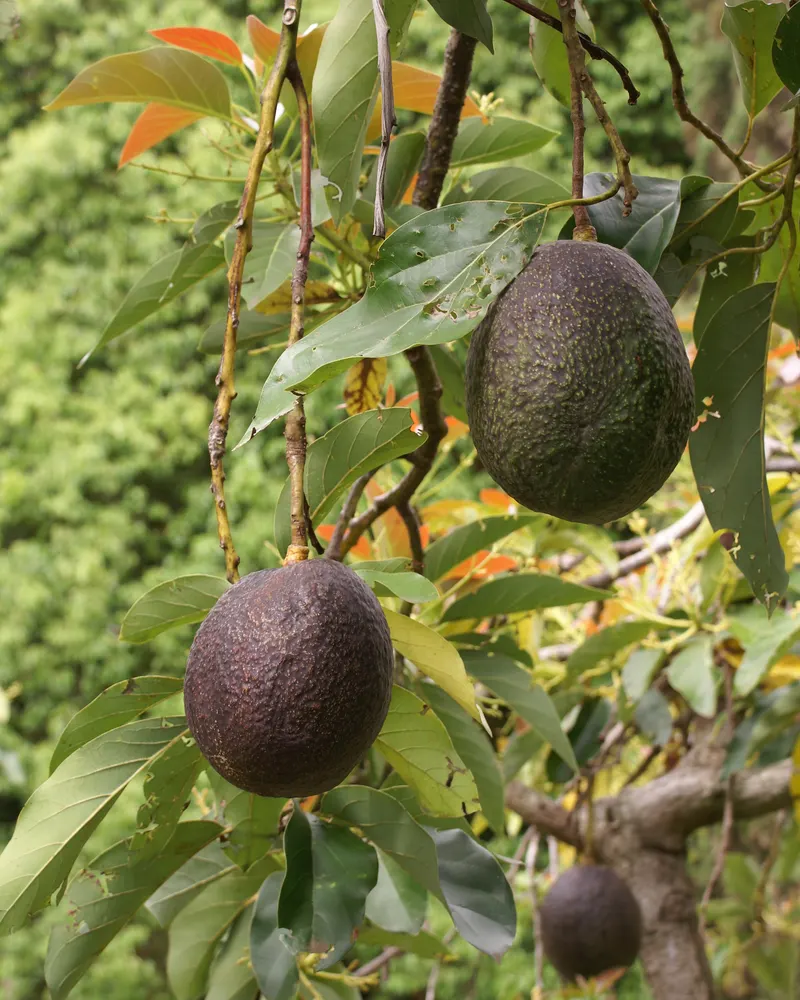
Photo: B.navez, CC BY-SA 3.0 (via Wikimedia Commons)
Avocado
Persea americana
Also known as Alligator Pear, Aguacate, Butter Fruit
Key benefits
✦Traditional uses
✦Long before avocado toast, the Aztec, Maya, and other Mesoamerican peoples were cultivating this tree for its buttery fruit, calling it ahuacatl in Nahuatl, a word also tied to fertility and vitality. The flesh was eaten fresh and mashed onto skin and hair as a softening treatment, while the leaves were steeped into a folk tea for digestive complaints and taken to ease menstrual discomfort. Spanish chroniclers noted its cultivation across the region within decades of contact, and the fruit traveled the trade routes of the Americas long before it crossed the Atlantic to become a global favorite.
Growing guide
✦Fresh to dried
✦Traditional preparations
✦Ripe Avocado Skin & Hair Mask
A traditional Latin American and Caribbean beauty treatment, prized for leaving skin and hair feeling soft and supple.
How it's made. Mash the flesh of half a ripe avocado until smooth and apply to clean skin or hair. Leave on for 10 to 15 minutes, then rinse well with warm water.
Avocado Leaf Tea
A folk remedy from Mexico and the Caribbean, traditionally sipped for occasional digestive discomfort.
How it's made. Traditionally, a tea is made by steeping 1 dried avocado leaf, torn into pieces, in 250 ml of just-boiled water for 5 to 8 minutes, taken only occasionally.
- ✦Lime
- ✦Cilantro
- ✦Sea Salt
- ✦Olive oil (as a cooking fat)
- ✦Peppermint tea (for digestive comfort)
“The fruit you reach for when you want good fat, quiet richness, and a little green comfort on the plate.”
Avocados are thought to be an evolutionary leftover from the age of giant ground sloths and gomphotheres, enormous Ice Age mammals that likely swallowed the fruit whole and carried the oversized seed far from the parent tree. Most of those animals vanished thousands of years ago, which is one reason botanists still puzzle over how the wild avocado once spread before humans stepped in as its new dispersers.
The ripe fruit is safe and nourishing, but the leaves, bark, skin, and pit contain persin, which is toxic to birds, horses, and many other animals, so keep them away from pets and livestock. Some people, especially those with a latex allergy, react to avocado with an itchy mouth or allergic symptoms, and leaf tea has traditionally been tied to effects on the uterus and milk supply, so avoid it in pregnancy and breastfeeding.