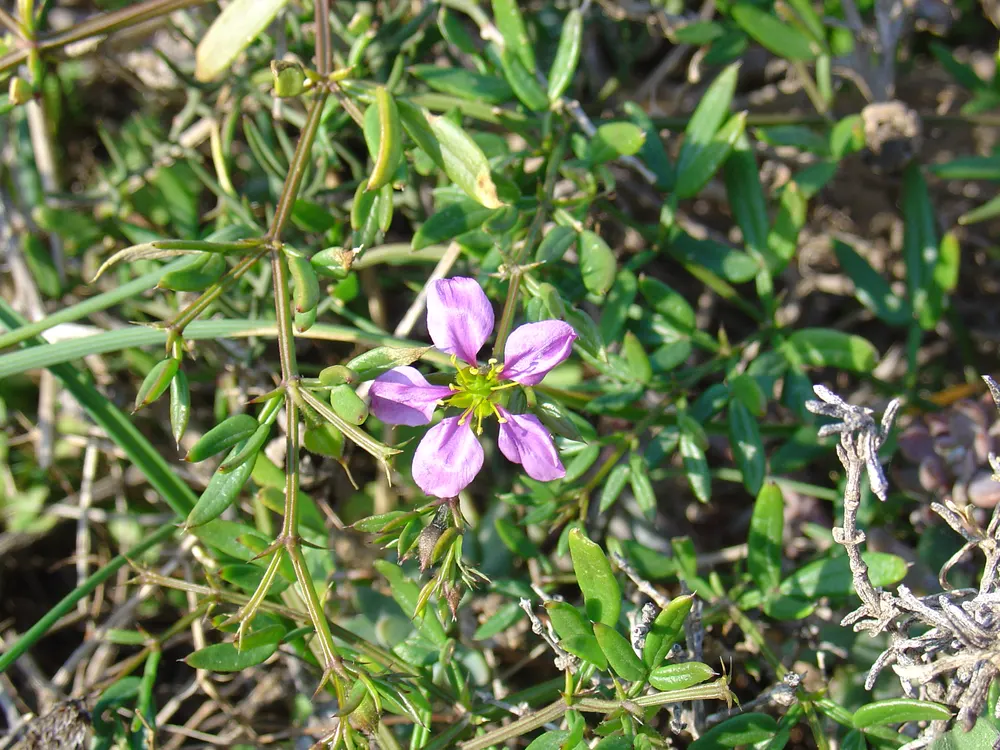
Photo: Retama, CC BY-SA 3.0 (via Wikimedia Commons)
Dhamasa
Fagonia cretica
Also known as Cretan Fagonia, Dhanasa, Dhamaso, Virgin's Mantle (regional)
Key benefits
✦Traditional uses
✦Long before it drew the attention of modern laboratories, dhamasa was a workhorse herb of Ayurvedic and Unani medicine, carried through the dry plains of India and Pakistan by healers who called on it for fevers, coughs, and stubborn skin troubles. Desert communities across North Africa and the Middle East valued this thorny little shrub too, steeping its bitter leaves into decoctions meant to cool the blood and clean the system after illness. It earned a quiet reputation as a general tonic, the kind of plant tucked into a household's dried herb basket for whenever the body seemed to need help fighting something off. Its resilience in punishing, waterless soil only added to its old reputation as a hardy, purifying ally.
How to grow & use it
✦The full apothecary for Dhamasa
Traditional remedies and step-by-step preparations, a complete growing guide, and how to harvest, dry, and store it, all unlocked with HerbLens Unlimited.
- ✦Remedies & preparations
- ✦ Growing guide
- ✦Harvest & storage
From under $6 a month. Free plant identifications always included.
- ✦Neem
- ✦Turmeric
- ✦Manjistha
- ✦Burdock root
- ✦Red clover
“For the dry, sunbaked corner of the herbal cabinet, reached for when tradition called for cooling a fever and clearing the blood.”
The genus Fagonia was named for Guy-Crescent Fagon, the personal physician to King Louis XIV of France and a devoted royal botanist, who never once laid eyes on this small desert shrub growing an ocean away.
Dhamasa has limited modern safety research, so it's best used only occasionally and in small amounts. Avoid during pregnancy and breastfeeding, and use caution alongside blood pressure or blood sugar medications since interactions haven't been well studied.