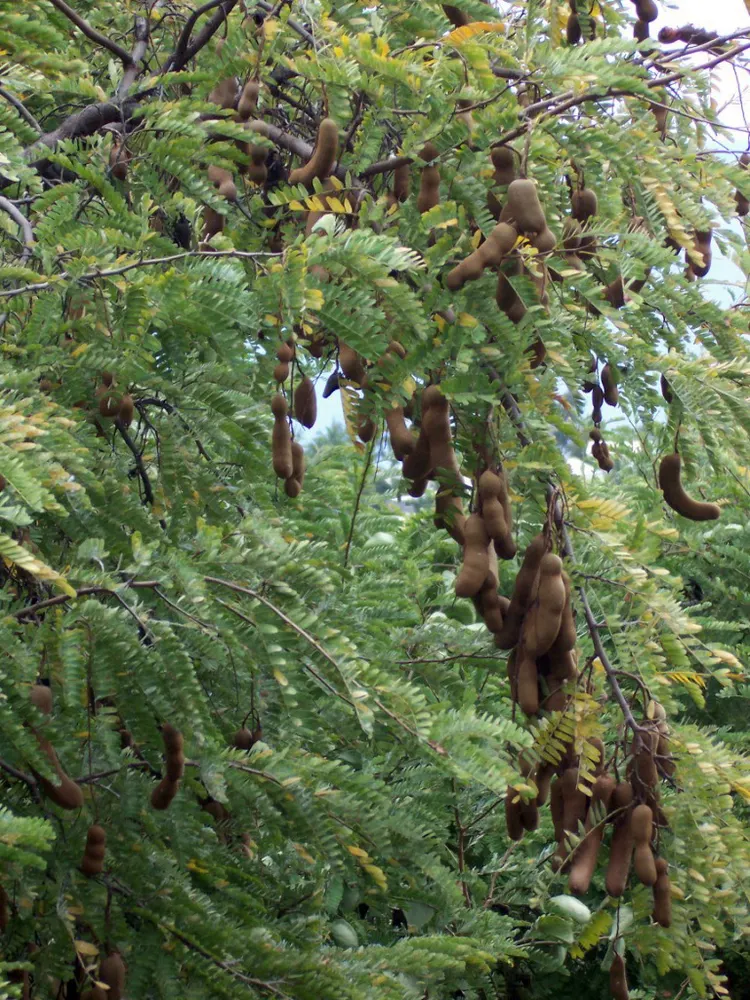
Photo: B.navez, CC BY 2.5 (via Wikimedia Commons)
Tamarind
Tamarindus indica
Also known as Indian Date, Imli, Asam, Sampalok, Ambli
Key benefits
✦Traditional uses
✦Tamarind's sticky, sour pulp has been a fixture of kitchen and medicine cabinet alike for thousands of years, carried from its African homeland along ancient trade routes into India, where it became so deeply woven into the cuisine that its very name comes from the Arabic tamr hindi, meaning date of India. Ayurvedic and Southeast Asian folk traditions have long turned to the fruit pulp steeped as a drink to settle an unsettled stomach, ease constipation, and take the edge off a fever. In West African and Caribbean households, tamarind water has been a common home remedy passed down for sore throats and general malaise, valued as much for its comfort as its chemistry.
How to grow & use it
✦The full apothecary for Tamarind
Traditional remedies and step-by-step preparations, a complete growing guide, and how to harvest, dry, and store it, all unlocked with HerbLens Unlimited.
- ✦Remedies & preparations
- ✦ Growing guide
- ✦Harvest & storage
From under $6 a month. Free plant identifications always included.
- ✦Ginger
- ✦Turmeric
- ✦Mint
- ✦Lemon juice
- ✦Pomegranate molasses
“For that bright, sour depth that wakes up a curry, a chutney, or a glass of cooling water on a hot afternoon.”
Tamarind trees are so long-lived and sturdy that a single tree can keep bearing fruit for well over a hundred years, and their dense, termite-resistant wood has traditionally been prized for tool handles and cutting boards.
Tamarind is a safe, common food; in concentrated medicinal amounts it may add to the effect of blood-thinning or diabetes medications.