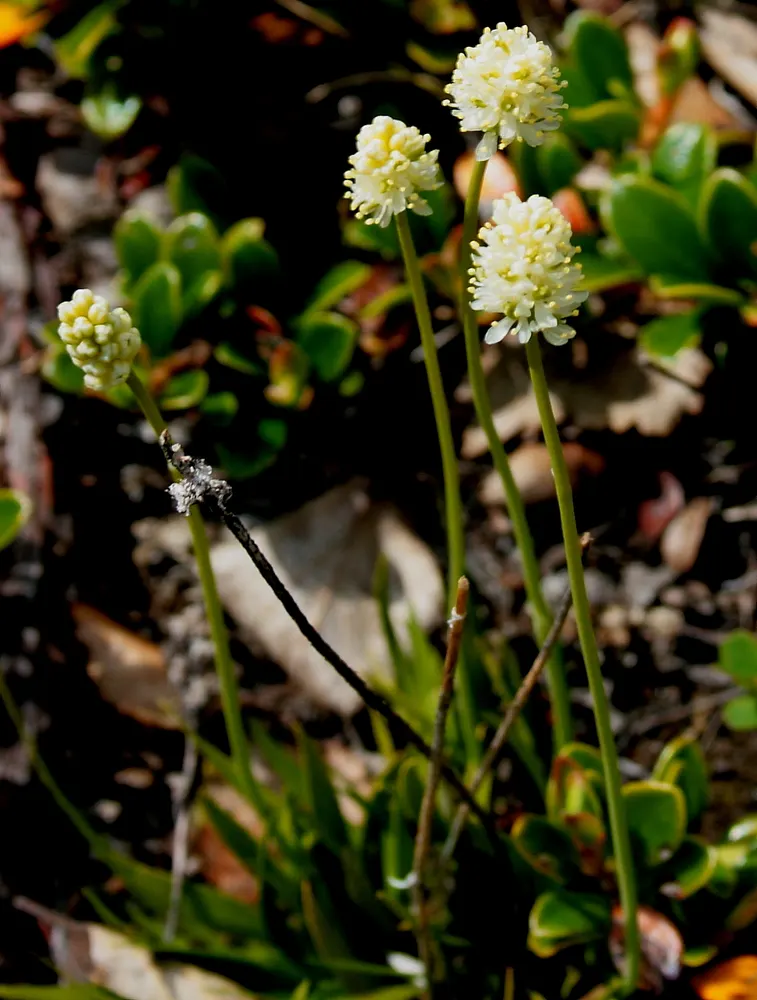
Photo: Hedwig Storch, CC BY-SA 3.0 (via Wikimedia Commons)
Dwarf False Asphodel
Tofieldia pusilla
Also known as Scottish Asphodel, Alpine False Asphodel, Tofieldia
Key benefits
✦Traditional uses
✦Dwarf false asphodel does not carry a folk tradition of medicine or the kitchen the way many herbs do, and honest reference here matters more than a tidy story. Its real value has always been botanical and ecological. This is one of the oldest surviving branches of the flowering monocots, a tiny plant that has been quietly holding its ground on cold, wet mountain ledges since long before most familiar garden herbs evolved. Where it grows, botanists read it as a sign of undisturbed, mineral-rich ground, the kind of habitat that has changed very little since the ice retreated. For alpine gardeners and wildflower hunters, spotting it is less about what it can do for you and more about the quiet thrill of finding something so old and so small still holding on.
How to grow & use it
✦The full apothecary for Dwarf False Asphodel
Traditional remedies and step-by-step preparations, a complete growing guide, and how to harvest, dry, and store it, all unlocked with HerbLens Unlimited.
- ✦Remedies & preparations
- ✦ Growing guide
- ✦Harvest & storage
From under $6 a month. Free plant identifications always included.
- ✦Saxifraga species (saxifrage)
- ✦Primula farinosa (bird's-eye primrose)
- ✦Carex sedges
- ✦No traditional herbal substitute exists; it is easily confused by name with the unrelated Narthecium ossifragum, or bog asphodel
“For the quiet thrill of finding a fragment of the ice age still blooming on a wet mountain ledge.”
Tofieldia pusilla belongs to Tofieldiaceae, a small family that DNA studies place near the very base of the monocot family tree, making this modest little flower one of the closest living links to what the earliest flowering monocots may have looked like.
Dwarf False Asphodel has no history of food or medicinal use and hasn't been studied for safety, so it shouldn't be eaten or brewed. It's rare and slow-growing in places like the Scottish Highlands, so admire it rather than picking it.